

Introduction
Roger Dean (16 March 1943—3 August 2008) was a British guitar player and teacher.
Life and career
Roger Dean was born David Roger Bryan Dean on 16 March 1943 in Hendon, Middlesex, United Kingdom. He first took piano lessons at age 7, then guitar at age 10. He then had musical training at Eric Guilder Guitar School in London with teacher Ivor Mairants.
Dean's professional career ran over 40 years until he retired following a car crash in 2004. During the 1960s, he played in a number of bands which left few traces in the history of popular music. The notable exception occurred when he joined briefly John Mayall's Bluesbreakers. Dean's guitar is heard on Mayall's first album and single.
Leaving Mayall, Dean went to work with his former band the Nu Notes. In 1971, he played with a band called Spike Island and recorded an album with them, a mixture of folk, country, and world music. Later, as a member of various other bands like The Bluejays, P. P. Arnold's backing band and The Bad Boys, he recorded on some hits, but gradually turned to more anonymous work as a session musician playing for TV shows, backing stars, and other lucrative jobs, such as cruises on the QE2 as guitarist with The Joe Loss Orchestra.
In 1978, Dean became the first Western musician allowed to play on electric guitar in China. From 1992, he held teaching posts at various British schools.
Death
After a serious illness, Dean died on 3 August 2008 at age 65.
Discography
- 1964 : Crocodile Walk/When I'm Gone Single on Decca Records by John Mayall's Bluesbreakers.
- 1965 : John Mayall plays John Mayall by John Mayall's Bluesbreakers Album Live at Klooks Kleek, 7/12/64.
- 1968 : So Many Roads by John Mayall's Bluesbrakers - Compilation - Roger Dean guitar on 3 songs.
- 1969 : Looking Back by John Mayall's Bruesbreakers - Compilation - Roger guitar on one song, Blues City Shakedown.
- 1971 : Thru The Years by John Mayall's Bluesbreakers - Compilation - Roger guitar on one song, My Baby Is Sweeter
- 1971 : Spike Island by Spike Island
- 1971 : Wild Angels/Six Chevaux Blancs (John Hill) by Eddy Orini - Single on Evasion Records
- 1972 : Down The Line by John Mayall - Compilation
- 1973 : When Will I See You Again/Year Of Decision by The Three Degrees - Single
- 1974 : The Beginning Vol. 13 by John Mayall - Compilation
- 1976 : J K All the way by Jonathan King
- 1979 : O Cheryl/Ode to England by Manuel And Los Por Favors [Andrew Sachs] - Single by Andrew Sachs, iconic character in British comedy.
- 1980 : The Munch Bunch - Stories And Songs by Brian Wade
- 1981 : Rare Tracks Vol. 2 by John Mayall - Compilation - Roger guitar on Another Man Done Gone
- 1982 : The Great British Blues, Barrelhouse And Boogie Bonanza 1962-1968 by Various Artists - Compilation featuring Alexis Korner's Blues Incorporated, Graham Bond Organisation, John Mayall's Bluesbreakers, Eddie Boyd And His Blues Band, Savoy Brown Blues Band, Ten Years After and John Mayall's Bluesbreakers* Featuring Eric Clapton. - Roger on one song, I Need Your Love
- 1982 : Lorraine by Lorraine
- 1992 : London Blues 1964 - 1969 by John Mayall - Compilation - Roger on 3 songs
About John Mayall & the Bluesbreakers
John Mayall & the Bluesbreakers were an English blues rock band led by multi-instrumentalist, singer and songwriter John Mayall. The band has been influential as an incubator for British rock and blues musicians. Many of the best known bands to come out of Britain in the 1960s and 1970s had members that came through the Bluesbreakers at one time, forming the foundation of British blues music that is still played heavily on classic rock radio. Among those with a tenure in the Bluesbreakers are guitarists Eric Clapton (later of Cream, Blind Faith, Derek and the Dominos and a successful solo career), Peter Green (later of Fleetwood Mac) and Mick Taylor (later of the Rolling Stones), bassists John McVie (later of Fleetwood Mac), Jack Bruce (later of Cream) and Tony Reeves (later of Colosseum), drummers Hughie Flint, Aynsley Dunbar (later of Frank Zappa and the Mothers of Invention, Journey and Jefferson Starship), Mick Fleetwood (later of Fleetwood Mac) and Jon Hiseman (later of Colosseum), and numerous others.
Mayall used the band name between 1963 and 1970, then dropped it for twelve years. In 1982, a 'Return of the Bluesbreakers' was announced, and the name was used until the band again dissolved in 2008. The name has become generic, without a clear distinction between recordings by Mayall alone and those by Mayall and his band.
History
The band that would evolve into the Bluesbreakers in 1965 was formed in February 1963 and became an ever-changing lineup of more than 100 combinations of musicians performing under the name. Eric Clapton joined in April 1965, a few months after the release of their first album. Clapton brought guitar-led blues influences to the forefront of the group; he had left The Yardbirds in order to concentrate on the blues.
The first single released by John Mayall and his band, in May 1964, was the song "Crawling Up a Hill", with "Mr. James" as the B-side. The band on the single was composed of Peter Ward, John McVie on bass, Bernie Watson on guitar, and Martin Hart on drums. After the release, Watson was replaced by Roger Dean, and Hart by Hughie Flint. This lineup played on the album John Mayall Plays John Mayall, recorded in December 1964 and released in 1965. After this, the band released a single called "Crocodile Walk", with "Blues City Shakedown" as the b-side, which was produced by Tony Clarke of Decca Records. Dean then left the group and was replaced by Clapton.
The group lost their record contract with Decca that year, which also saw the release of a single called "I'm Your Witchdoctor" (produced by Jimmy Page) in October 1965, the first credited to John Mayall & the Bluesbreakers, followed by a return to Decca in 1966. Then in August 1966 John Mayall and Eric Clapton released the single "Lonely Years", with the b-side "Bernard Jenkins", which was released by Purdah Records. The album Blues Breakers with Eric Clapton was released in July; it reached the Top Ten in the UK.
Shortly after Blues Breakers with Eric Clapton was released, Eric Clapton saw Buddy Guy in concert, and being impressed by his trio, the idea for Cream was formed, and he left to form this new group with Ginger Baker and Jack Bruce. Clapton was replaced by Peter Green for the album A Hard Road, which was recorded with McVie on bass and Aynsley Dunbar on drums. Then the same line-up served as backing band for the album Eddie Boyd and His Blues Band Featuring Peter Green. After this, Green left to form Fleetwood Mac.
Mick Taylor then joined the group, and they recorded Crusade on 12 July 1967. Soon after, McVie joined Fleetwood Mac and was replaced by Tony Reeves for the album Bare Wires, which was their highest-charting UK album. Then Reeves, Dick Heckstall-Smith and Jon Hiseman left to form Colosseum. Following a further album, Blues from Laurel Canyon, Taylor then left to join the Rolling Stones, and the name "Bluesbreakers" was dropped from John Mayall albums.
By the time the 1960s were over, the Bluesbreakers had finally achieved some success in the United States.
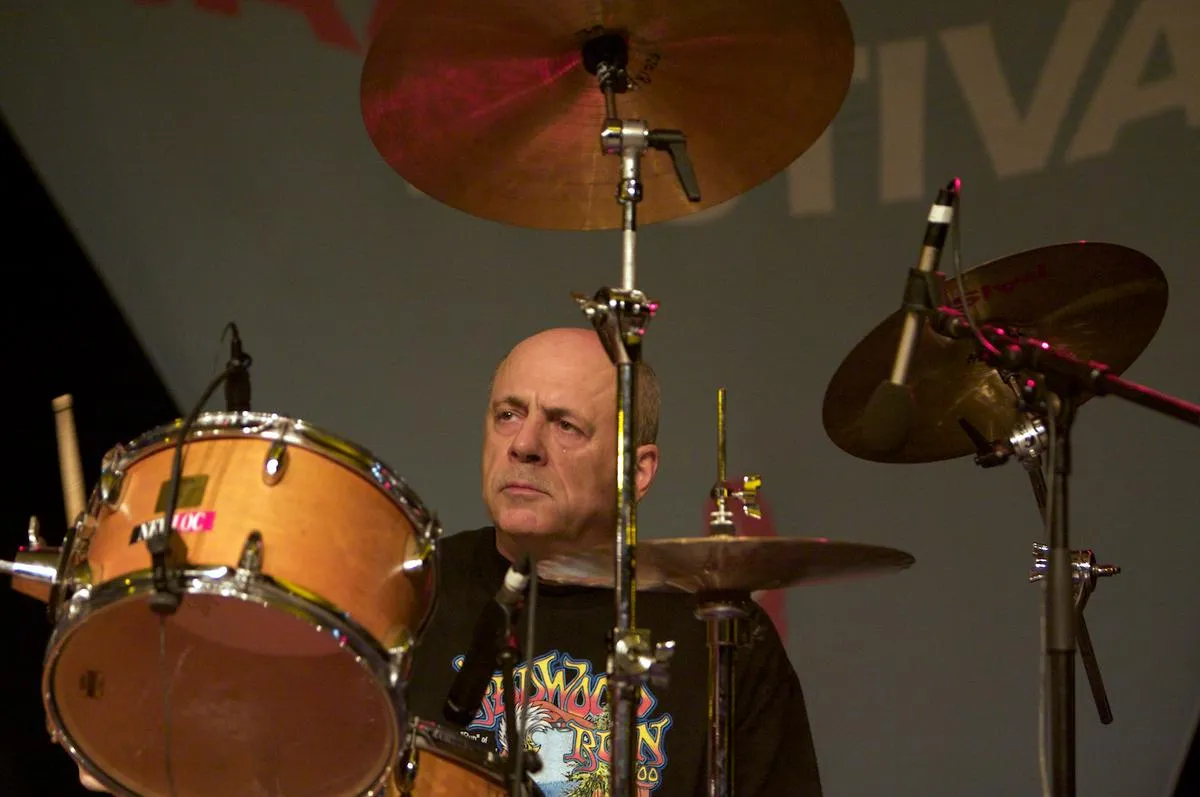
With some interruptions, the Bluesbreakers have continued to tour and release albums (over 50 to date), though they never achieved the critical or popular acclaim of their earlier material. In 2003, Eric Clapton, Mick Taylor and Chris Barber reunited with the band for John Mayall's 70th Birthday Concert in Liverpool—the concert was later released on CD and DVD. In 2004, their lineup included Buddy Whittington, Joe Yuele, Hank Van Sickle and Tom Canning, and the band toured the UK with Mick Taylor as a guest musician.
In November 2008, Mayall announced on his website he was disbanding the Bluesbreakers, to cut back on his heavy workload and give himself freedom to work with other musicians. A 2009 solo tour with Rocky Athas (formerly of Black Oak Arkansas) was the first musical venture Mayall undertook after disbanding the band. Former band member Johnny Almond died on 18 November 2009 from cancer, aged 63.
In 2009, Eagle Records asked Mayall for a new album, and he put together a solo band including Rocky Athas (guitar), Tom Canning (keyboard), Greg Rzab (bass) and Jay Davenport (percussion) and produced the album Tough the same year. After a year, Canning left because of other priorities.
John Mayall died on 22 July 2024 at the age of 90, effectively ending the band.
Members
Main lineup
- John Mayall – vocals, keyboards, harmonica, rhythm guitar
- Jay Davenport – drums, percussion
- Greg Rzab – bass, double bass
- Carolyn Wonderland – lead guitar, vocals
Discography
Studio albums
- Blues Breakers with Eric Clapton (1966)
- A Hard Road (1967)
- Crusade (1967)
- Bare Wires (1968)
- Empty Rooms (1969)
- Return of the Bluesbreakers (1985)
- Chicago Line (1988)
- A Sense of Place (1990)
- Cross Country Blues (1992)
- Wake Up Call (1993)
- Spinning Coin (1995)
- Blues for the Lost Days (1997)
- Padlock on the Blues (1999)
- Stories (2002)
- Road Dogs (2005)
- In the Palace of the King (2007)