
Introduction
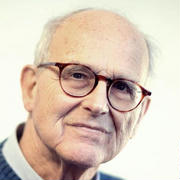
Rainer "Rai" Weiss (; German: [vaɪs]; born September 29, 1932) is a German-born American physicist, known for his contributions in gravitational physics and astrophysics. He is a professor of physics emeritus at MIT and an adjunct professor at LSU. He is best-known for inventing the laser interferometric technique which is the basic operation of LIGO. Rainer Weiss was Chair of the COBE Science Working Group.
In 2017, Weiss was awarded the Nobel Prize in Physics, along with Kip Thorne and Barry Barish, "for decisive contributions to the LIGO detector and the observation of gravitational waves".
Early life and education
Rainer Weiss was born on September 29, 1932 in Berlin, Germany, the son of Gertrude Loesner and Frederick A. Weiss. His mother, a Christian, was an actress. His father, a physician, neurologist, and psychoanalyst, was forced out of Germany by Nazis because he was Jewish and an active member of the Communist Party. The family fled first to Prague, but Germany's occupation of Czechoslovakia after the 1938 Munich Agreement caused them to flee; the philanthropic Stix family of St. Louis enabled them to obtain visas to enter the United States. Weiss spent his youth in New York City, where he attended Columbia Grammar School. He studied at MIT and after dropping out in his junior year returned to receive his SB in 1955 and PhD in 1962 from Jerrold Zacharias. He taught at Tufts University in 1960–62, was a postdoctoral scholar at Princeton University from 1962 to 1964, then joined the faculty at MIT in 1964.
Achievements
Weiss brought two fields of fundamental physics research from birth to maturity: characterization of the cosmic background radiation, and interferometric gravitational wave observation.
He made pioneering measurements of the spectrum of the cosmic microwave background radiation, and then was co-founder and science advisor of the NASA COBE (microwave background) satellite. Weiss also invented the interferometric gravitational wave detector, and co-founded the NSF LIGO (gravitational-wave detection) project. Both of these efforts couple challenges in instrument science with physics important to the understanding of the Universe.
In February 2016, he was one of the four scientists presenting at the press conference for the announcement that the first direct gravitational wave observation had been made in September 2015. He was awarded the 2017 Nobel Prize for Physics.
Honors and awards
Rainer Weiss has been recognized by numerous awards including:
- In 2006, with John C. Mather, he and the COBE team received the Gruber Prize in Cosmology.
- In 2007, with Ronald Drever, he was awarded the Einstein Prize for this work.
- For the achievement of gravitational waves detection, in 2016 and 2017 he received:
- The Special Breakthrough Prize in Fundamental Physics,
- Gruber Prize in Cosmology,
- Shaw Prize,
- Kavli Prize in Astrophysics
- The Harvey Prize together with Kip Thorne and Ronald Drever.
- The Smithsonian magazine's American Ingenuity Award in the Physical Science category, with Kip Thorne and Barry Barish.
- The Willis E. Lamb Award for Laser Science and Quantum Optics, 2017.
- Princess of Asturias Award (2017) (jointly with Kip Thorne and Barry Barish).
- The Nobel Prize in Physics (2017) (jointly with Kip Thorne and Barry Barish)