PE

Frequently asked questions
FAQ
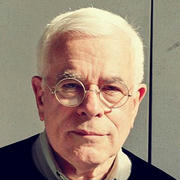
Who is Peter Eisenman?
Peter Eisenman is an American architect, educator, and theorist. He is known for his innovative and thought-provoking approach to architecture, which often includes complex and abstract forms that challenge traditional ideas of design.
What is Peter Eisenman's architectural style?
Peter Eisenman is associated with the architectural style known as deconstructivism. This style is characterized by fragmented forms, unconventional materials, and an emphasis on the exploration of space and structure. Eisenman's designs often push the boundaries of conventional architecture and seek to provoke thought and discussion.
What are some of Peter Eisenman's notable works?
Some of Peter Eisenman's notable works include the Memorial to the Murdered Jews of Europe in Berlin, Germany; the Wexner Center for the Arts in Columbus, Ohio; and the City of Culture of Galicia in Santiago de Compostela, Spain. He has also designed numerous private residences, public buildings, and academic institutions around the world.
Has Peter Eisenman received any awards or recognition for his work?
Yes, Peter Eisenman has received numerous awards and recognition for his contributions to architecture. Some of his notable awards include the AIA/ACSA Topaz Medallion for Excellence in Architectural Education and the Golden Lion for Lifetime Achievement from the Venice Biennale. He is also a Fellow of the American Academy of Arts and Sciences.
How has Peter Eisenman contributed to architectural theory?
Peter Eisenman is not only an architect but also a respected theorist and educator. He has written extensively on architecture, focusing on topics such as architectural language, post-structuralism, and the relationship between architecture and philosophy. His theoretical works have greatly influenced the field of architecture and have contributed to the development of new ideas and perspectives.