
Introduction
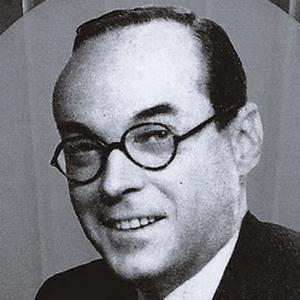
Eric Kirkham Cole (14 July 1901-18 November 1966) was a British electrical engineer. Remembered for founding Ekco, an electronics maker, Cole was a pioneering figure in the British electronics industry in the 20th century.
Early life and education
Cole was born on July 14, 1901, in Prittlewell, Southend-on-Sea, the son of Henry Cole, a dairyman, and his wife Alice Laura Kirkham. He attended Southend High School for Boys and Southend Day Technical School. After finishing his education, he became interested in radio and radio engineering. At the time, the radio industry in the UK was picking up, and regular radio broadcasts had just started.
Career
Cole began his career working in his father's business, fitting electrics to houses.
In 1922, he and his girlfriend, Muriel Bradshaw, started a small business in Leigh on Sea to manufacture wireless radio sets. They made two valve receivers that sold for around £6 with batteries and headphones.
Battery eliminator breakthrough
After the end of World War I, William Streatfield Verrells, a freelance journalist, published an article in which he recounted the inconvenience of carrying heavy and expensive high-voltage batteries that radios originally required. Cole, who, at the time, was working on a "battery eliminator" to run radios off standard household mains, contacted Verrells about his invention. Cole called his device "H.T. (High Tension) eliminator", which he had patented in 1924.
Verrells was impressed by Cole's work, and the two went into a business partnership in 1925. In 1926, the partnership evolved into E. K. Cole Limited, launching the brand name EKCO (abbreviated from Eric Kirkham Cole Limited). Cole served as the Technical Director, while Verrells served as the Chairman and Managing Director. Cole, Verrells, and Muriel Bradshaw (by now, Cole's wife) did door-to-door sales of their device. They would knock on any door in the town that had a radio aerial outside their property.
Ekco went on to become one of the most successful radio and electronics manufacturers in the United Kingdom during the 20th century. They pioneered the use of molded Bakelite for radio cases instead of traditional wood.
After raising funds in 1927, Ekco set up a new factory in Leigh-on-Sea, employing around 50 people. The company went public in 1930 and established one of the largest factories in Britain, intended specifically for making radio receivers.
In 1934, Ekco launched its first car radio at the 1934 Radiolympia exhibition. By that time, the company had a turnover of over £1 million.
During the Second World War, Ekco made war-critical goods. These included radio equipment, such as the on-board transmitter T1154 and the associated on-board receiver R1155 for the Royal Air Force, and Radar equipment and electronic components for the first guided missile.
Expansion of Ekco
By 1945, Ekco was making mains and portable radios, mains and portable TVs, radiograms, tape recorders, car radios, electric heaters, and electric blankets, and had over 8,000 people working for it across various locations.
In 1947, the company introduced the Wireless Set No. 88 VHF man-pack transceiver for use by the British Army.
In 1954, Ekco bought the Dynatron Radio Ltd., a prestigious British manufacturer of luxury wireless equipment, radiograms, and televisions
In 1958, Cole was appointed CBE.
In December 1960, Ekco merged with its competitor Pye Ltd. to form British Electronic Industries (BEI) Ltd. Pye's head, Charles Orr Stanley, became the chairman, while Cole served as vice-chairman. 7 years later, BEI was acquired by the Dutch multinational Philips.
After retiring from BEI in 1961. Cole served as the chairman of Robinson Rentals, a television rental company, in 1962-64.
Personal life
Cole married his girlfriend and business associate, Muriel Bradshaw (1904–1965), in 1925. They had two children.
Honors
Eric Cole was awarded the Commander of the Order of the British Empire (CBE) in 1958.
Death
Cole died on November 18, 1966, in a bathing accident at Fitts Village, St James, Barbados.