

Introduction
DeWitt Peck (May 29, 1894 – January 13, 1973) was a decorated officer of the United States Marine Corps with the rank of Major general, who served as the 18th Assistant to the Major General Commandant of the Marine Corps during World War II. He later commanded 1st Marine Division during Operation Beleaguer within Chinese Civil War.
Early years
DeWitt Peck was born May 29, 1894 in Bakersfield, California as the son of Army Captain Frank W. Peck and his wife, Margaret Hubard. He moved with his family to Clayton, New York in childhood and attended schools there. Peck was appointed to the United States Naval Academy at Annapolis, Maryland by President William Howard Taft and graduated in June 1915 as Second lieutenant in the Marine Corps. He attended additional training at Marine Officers School at Portsmouth, Virginia and subsequently sailed for Haiti with 1st Brigade of Marines in January 1916. During his time in Haiti, Peck was stationed in Jacmel and served with local Gendarmerie units.
He remained in the Caribbean until the end of March 1917, when he was transferred to the Marine Detachment aboard the cruiser USS Olympia. Peck subsequently participated in the patrol duties along the East Coast with this ship. During his service on Olympia, he was promoted to the rank of First lieutenant on August 4, 1917.
On 5 September 1917, he was transferred as Instructor to the battleship USS Louisiana, which was used as training ship for midshipmen and naval militia units. Captain Peck (promoted to the rank of Captain on October 3, 1917) repeatedly requested combat assignment, which was finally granted at the end of March 1918, when he was transferred to the Marine Barracks Quantico, Virginia and subsequently sent to France.
Peck arrived to Brest on June 8, 1918 and finally joined 5th Marine Regiment on August 22, 1918. Captain Peck was appointed Commanding officer of the 55th Company, 2nd Battalion and led his unit through Battle of Saint-Mihiel. He was wounded by the effects of combat gas during the Battle of Blanc Mont Ridge on October 4, 1918 and relieved by another late General officer, Lemuel C. Shepherd.
Interwar period
Peck returned to his unit after his recovery and participated in the Occupation duties in Germany until 25 June 1919, when he was ordered to the United States. Upon his return, Peck reported at Headquarters Marine Corps in Washington, D.C. and was assigned as an instructor in the School of musketry at Marine Barracks Quantico, Virginia.
World War II
Colonel Peck was appointed Commanding officer of the 4th Marine Regiment (China Marines) stationed in Shanghai, China to protect American citizens and property in the Shanghai International Settlement. Peck was commended for his work during his service in China by Commander in Chief, Asiatic Fleet, Admiral Thomas C. Hart and received Navy Commendation Medal.
Peck was subsequently relieved by Colonel Samuel L. Howard on May 13, 1941 and returned to Washington, D.C., where he was attached to the staff of the Commander in Chief, United States Fleet, Admiral Ernest King. He was directly assigned to the War Plans Division of that command and served under Richmond K. Turner until May 1942. Meanwhile he was promoted to the rank of Brigadier General in March 1942. Peck was subsequently transferred to the Southern Pacific theater and assigned as Assistant Chief of Staff for War Plans to the South Pacific area Commander, Vice admiral Robert L. Ghormley. Admiral Ghormley has been relieved by William Halsey Jr. in October 1942 and Peck remained on his staff. He subsequently participated in the planning of the allied advanced to the Central Solomon Islands for the upcoming New Georgia Campaign and flew from Pacific to Washington, D.C. in January 1943 to present the outline of the operation.
General Peck also requested additional forces necessary to assault Japanese positions in the New Georgia Islands, but his plea has been rejected by the Joint Chiefs of Staff (Marshall, King, Leahy and Arnold). In March 1943, he flew with admiral Turner for meeting at Pearl Harbor, where they introduced their plan to the USAFFE Commander, General Douglas MacArthur, who approve it. Peck remained in Pacific until July 1943, when he was ordered to Washington, D.C. and appointed to Headquarters Marine Corps as Director of the Division of Plans and Policies. For his previous service in Pacific, Peck was later decorated with Legion of Merit based on the recommendation made by admiral Halsey.
He served in this capacity until January 1944, when he was promoted to the temporary rank of Major General and appointed Assistant Commandant of the Marine Corps. Peck served in this capacity for the duration of the War and was relieved by Major general Allen H. Turnage at the end of July 1945.
Postwar career
Major general Peck assummed the command of 1st Marine Division, which was stationed on Okinawa and was preparing for planned Invasion of Japan. However Surrender of Japan on August 15, 1945 has changed the plans and Peck with his 1st Division were sent to supervised the disarmament and repatriation of Japanese troops in North China in September of that year. Peck and his troops met a great welcome from the local people, but one month later the activity of communists guerrilla units became increase. His troops were ambushed day by day and Peck personally was pinned down by enemy fire, while he was enroute to the headquarters of the China Theater Commander in Chinwangtao, General Albert C. Wedemeyer.
He remained in China until the beginning of June 1946, when he was succeeded by general Keller E. Rockey and returned to the United States. For his service there, he was decorated with his second Legion of Merit and also received the Chinese Order of the Cloud and Banner, 2nd Class by Chiang Kai-shek.
After a few months of medical leave in the United States, Peck finally retired from the Marine Corps on November 5, 1946 with the rank of Major general. He resided in New York and during 1953 served for brief period as Deputy director of Manpower utilization in the Department of Defense.
Major general DeWitt Peck died on January 13, 1973 in Andrews Air Force Base Hospital, Maryland and is buried at Arlington National Cemetery together with his wife Elizabeth Davis Peck (1889 - 1967). They had together one son, William Hubbard Peck (1922 - 1998), who also served with the Marines and retired with the rank of Lieutenant colonel.
Decorations
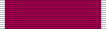
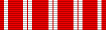
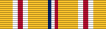
Major General Peck´s ribbon bar:
   |
|||
 |
  |
 |
 |
 |
 |
 |
 |
 |
 |
 |
 |
| 1st Row | Legion of Merit with Oak Leaf Cluster | Navy Commendation Medal | ||||||||||||||
|---|---|---|---|---|---|---|---|---|---|---|---|---|---|---|---|---|
| 2nd Row | Purple Heart | Marine Corps Expeditionary Medal with two service stars | World War I Victory Medal with two battle clasps | Army of Occupation of Germany Medal | ||||||||||||
| 3rd Row | Second Nicaraguan Campaign Medal | American Defense Service Medal with base clasp | American Campaign Medal | Asiatic-Pacific Campaign Medal with two service stars | ||||||||||||
| 4th Row | World War II Victory Medal | China Service Medal | Nicaraguan Cross of Valor with Diploma | Chinese Order of the Cloud and Banner, 2nd Class | ||||||||||||