


Introduction
Charles Hoskinson (born 1987 or 1988) is an American entrepreneur who is a co-founder of the blockchain engineering company Input Output Global, Inc. (formerly IOHK), and the Cardano blockchain platform, and was a co-founder of the Ethereum blockchain platform.
Career
In 2013, Hoskinson quit a consulting job to begin a project called the Bitcoin Education Project. According to Hoskinson, the limited supply makes Bitcoin like a digital form of gold.
He joined the Ethereum team as one of five original founders with Vitalik Buterin in late 2013 and held the position of chief executive. Buterin and the Ethereum team removed Hoskinson in 2014 after a dispute over whether the project should be commercial (Hoskinson's view) or a nonprofit (Buterin's view).
In late 2014, Hoskinson and former Ethereum colleague Jeremy Wood formed IOHK (Input Output Hong Kong), an engineering and research company, to build cryptocurrencies and blockchains. IOHK's key project is Cardano, a public blockchain and smart contract platform that hosts the ADA cryptocurrency. Hoskinson did not pursue venture capital for Cardano, saying that it ran counter to the blockchain's principles. Hoskinson has also said that venture capital involvement might lead to an outsized control of a project.
IOHK has sponsored research focused on blockchain technology at the University of Edinburgh, Tokyo Institute of Technology, Stanford University, and the University of Wyoming.
Forbes magazine estimated Hoskinson's wealth as $500m–$600m in 2018.
Philanthropy
In September 2021, Hoskinson donated $20 million to Carnegie Mellon University's philosophy department to establish and run the Hoskinson Center for Formal Mathematics with the goal of studying formal logical systems.
In late 2022, Hoskinson and his family assisted in creating the Hoskinson Health and Wellness Clinic in Gillette, a town in Campbell County, Wyoming.
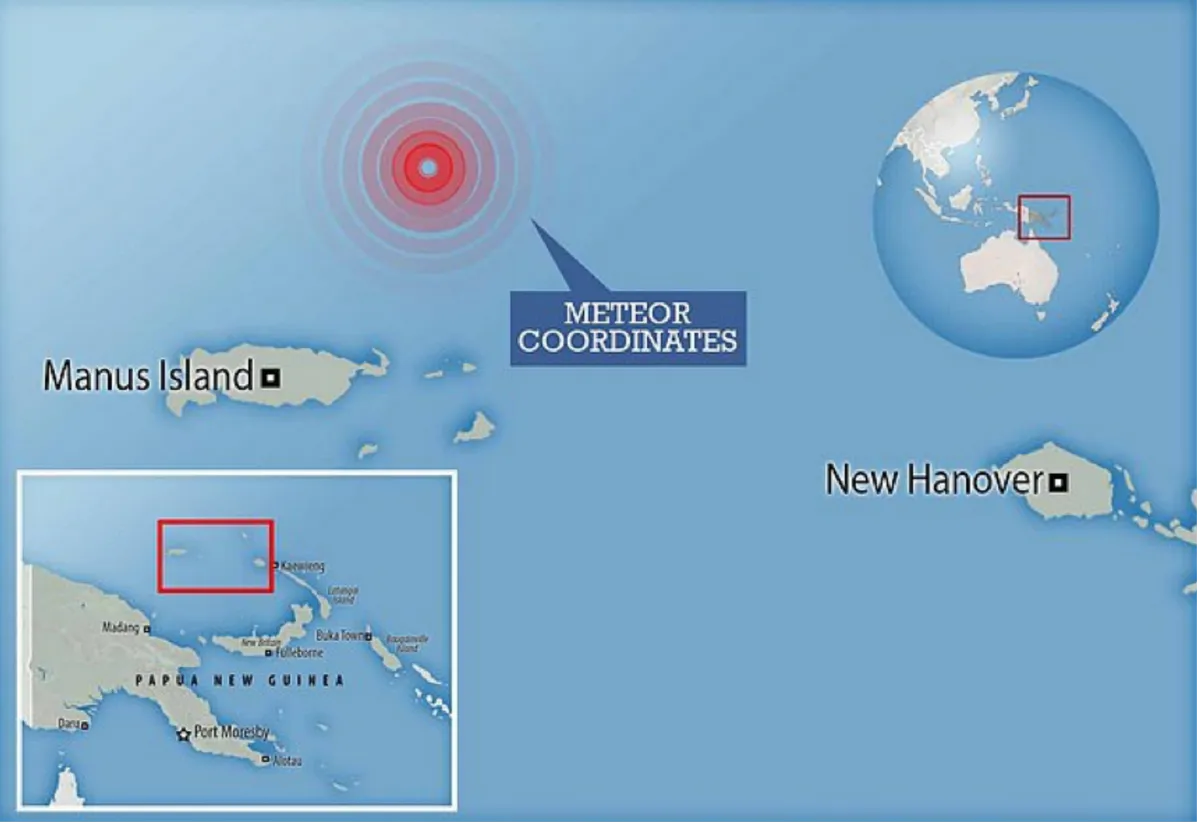
Hoskinson contributed $1.5 million to fund a 2023 Galileo Project expedition led by astronomer and "alien hunter" Avi Loeb to explore debris from the meteorite CNEOS 2014-01-08 (also called IM1) that crashed into the Pacific Ocean in 2014. Loeb argued that this object could have been created by alien life, an idea that lacked widespread support from the scientific community. The expedition reported finding tiny metallic spheres from the object on the ocean floor. Loeb claimed his team's analysis of these spherules did not match any known alloy, though it was unclear whether they were artificial or natural in origin. However, a paper published by the American Astronomical Society In October showed that the chemical compositions provided by Loeb’s analysis most closely matched human-produced coal ash.
Personal life
As of 2022, Hoskinson purchased a ranch near Wheatland, Wyoming, donated equipment to the Platte County Sheriff's Office, and purchased a restaurant in Wheatland.
In 2023, Wyoming Public Radio said Hoskinson, along with his father, Dr. Mark Hoskinson, and brother, Dr. William Hoskinson, had opened a clinic focusing on anti-ageing and regenerative medicine in Gillette, Wyoming. Mark and William Hoskinson had both formerly worked for Campbell County Health. The director of the Hoskinson Health and Wellness Clinic said it had cost $18 million. Charles Hoskinson said cryptocurrency would be accepted in the future.
Political views
In 2007, Hoskinson, "an anti-war Republican college student with an interest in monetary policy" worked as a fundraiser for the Republican presidential campaign of the Texas congressman Ron Paul. However, he grew disillusioned with the prospects for anti-government activism. "Libertarianism has always had a [bank] check it can’t cash," he said, "Just because we distrust the government doesn’t mean we don’t need a governing structure." He then discovered bitcoin and began exploring cryptocurrency.
In May 2024, Slate magazine reported that Hoskinson was one of the technology and finance "disrupters" who were backing Robert F. Kennedy Jr. "RFK" was standing as an independent candidate for the US presidency. Hoskinson said he was no longer "voting for the lesser of two evils [Biden and Trump]".