


Introduction
Léon Joseph Marie Ignace Degrelle (French: [dəgʁɛl]; 15 June 1906 – 31 March 1994) was a Walloon Belgian politician and Nazi collaborator, who founded Rexism and later joined the Waffen SS (becoming a leader of its Walloon contingent) which were front-line troops in German combat operations against the Soviet Union. After World War II, he was a prominent figure in fascist movements.
Before the war
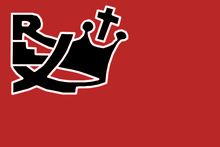
After studying at a Jesuit college and studying for a law doctorate at the Université catholique de Louvain, Degrelle worked as a journalist for the conservative Roman Catholic periodical Christus Rex. During his time at this publication, he became attracted to the ideas of Charles Maurras and French Integralism. Until 1934, Degrelle worked as a correspondent for the paper in Mexico, during the Cristero War. He led a militant tendency inside the Catholic Party, based on the Éditions de Rex that he'd founded. The Éditions drew its name from the battle cry of the Cristeros: Viva Cristo Rey y Santa María de Guadalupe, alluding to Christ the King.
Degrelle's actions inside the Catholic Party saw him come into opposition with the mainstream of the same party, many of whom were monarchist conservatives or centrists. The Rexist group, including the likes of Jean Denis, separated itself from the Catholic Party in 1935, after a meeting in Kortrijk. The newly formed party was heavily influenced by Fascism and Corporatism (but also included several elements interested solely in Nationalism or Ultramontanism); it had a vision of social equality that drew comparisons with Marxism, but was strongly anti-communist (anti-bolshevik). The party also came to denounce political corruption in Belgian politics. In 1936, in which Rex reached peak votes, it drew its support from Brussels (18.50%), Wallonia (15.16%), Flanders (7.01%), and the German-speaking Community of Belgium (or the territory corresponding to this present-day community) (26.44%). Rexism had a Flemish ideological competitor in the Vlaamsch Nationaal Verbond which advocated an independent Flanders and exclusive use of the Dutch language.
In 1936, Degrelle met Benito Mussolini and Adolf Hitler, both of them providing Rexism with funds (2 million lire and 100,000 marks) and ideological support. Elections in that year had given the Parti Rexiste 21 deputies and 12 senators, although its influence declined by 1939, when it managed to win only 4 seats in each Chamber. The party progressively added Nazi-inspired Antisemitism to its agenda, and soon established contacts with fascist movements around Europe. Degrelle notably met with Falange leader José Antonio Primo de Rivera and the Iron Guard's Corneliu Zelea Codreanu.
During this time (mid-1930s), Degrelle became acquainted with the cartoonist Hergé. In a volume published after his death (Tintin mon copain), the Rexist leader claimed that his years of journalism had inspired the creation of The Adventures of Tintin—ignoring Hergé's statements that the character was in fact based on his brother, Paul Remi. Degrelle had been shipping Mexican newspapers containing American cartoons to Belgium, and Hergé did admit years later in 1975 that Degrelle deserved credit for introducing him to the comic "strip".
Collaboration
When the war began, Degrelle approved of King Leopold III's policy of neutrality. After Belgium was invaded by the Germans on 10 May 1940, the Rexist Party split over the matter of resistance. He was arrested as a suspected collaborator, and evacuated to France. Unlike other Belgian deportees, Degrelle was spared in the Massacre of Abbeville and instead sent into a French concentration camp. He was later released when the occupation began. Degrelle returned to Belgium and proclaimed reconstructed Rexism to be in close union with Nazism - in marked contrast with the small group of former Rexists (such as Theo Simon and Lucien Mayer) who had begun fighting against the Nazi occupiers from the underground. In August, Degrelle started contributing to a Nazi news source, Le Pays Réel (a reference to Charles Maurras). Degrelle joined the Walloon legion of the Wehrmacht, which was raised in August 1941, to fight against the Soviet Union on the Eastern Front. The leadership of the Rexists then passed to Victor Matthys. Lacking any previous military service Degrelle joined as a private. He quickly rose upwards in the ranks. Initially, the group was meant to represent a continuation of the Belgian Army, and fought as such during Operation Barbarossa, while integrating many Walloons that had volunteered for service. The Walloons were transferred from the Wehrmacht to the Waffen-SS in June 1943, becoming the 5th SS Volunteer Sturmbrigade Wallonien.
From 1940, the Belgian Roman Catholic hierarchy had banned all uniforms during Mass. On 25 July 1943, in his native Bouillon, Degrelle was told by Dean Rev Poncelet to leave a Requiem Mass, because he was wearing his SS uniform, which church authorities had prohibited. Degrelle was excommunicated by the Bishop of Namur, but the excommunication was later lifted by the Germans, since as a German officer he was under the jurisdiction of the German chaplaincy.
Severely wounded at Cherkasy in 1943, Degrelle continued to climb the Schutzstaffel (SS) hierarchy after the inclusion of Walloons in the Waffen-SS, being made an SS-Obersturmbannführer (lieutenant colonel) in the early months of 1945. He was awarded the Ritterkreuz (Knight's Cross of the Iron Cross) by Hitler. Degrelle later claimed Hitler told him, "If I had a son, I would want him to be like you." Degrelle was later awarded the oakleaves (mit Eichenlaub), as were seven other non-Germans.
Military record
Promotions:

- 12 February 1942; Gefreiter (Heer)
- 28 February 1942; Oberfeldwebel (Heer)
- 1 May 1942; Leutnant d. R. (Heer)
- 1 June 1943; SS-Obersturmführer d. R. der Waffen-SS
- 1 January 1944; SS-Hauptsturmführer d. R. der Waffen-SS
- 1 April 1944; SS-Sturmbannführer d. R. der Waffen-SS
- 1 January 1945; SS-Obersturmbannführer d. R. der Waffen-SS
- 20 April 1945; SS-Standartenführer d. R. der Waffen-SS
Decorations & awards:

- 22 August 1944 Mentioned in the Wehrmachtbericht
- 27 August 1944 Eichenlaub zum Ritterkreuz des Eisernen Kreuzes as SS-Sturmbannführer d. R. and Kdr. 5.SS-Freiwilligen-Panzer-Brigade "Wallonien" / Kampfgruppe Wagner / Armee-Abteilung Narwa / Heeresgruppe Nord, Northeastern Front
- 20 February 1944 Ritterkreuz des Eisernen Kreuzes as SS-Hauptsturmfuhrer d. R., and Führer SS-Sturmbrigade "Wallonien" / 8.Armee / Heeresgruppe Süd, Eastern Front
- 9 October 1944 Deutsches Kreuz in Gold as SS-Sturmbannführer d. R. and Kdr. 5.SS-Freiwilligen-Sturmbrigade "Wallonien" / 5.SS-Panzer-Division "Wiking" / III.(germanische) SS-Panzer-Korps / Armee-Abteilung Grasser / Heeresgruppe Nord, Northeastern Front
- 25 May 1942; 1939 Eisernes Kreuz I. Klasse
- 3 March 1942; 1939 Eisernes Kreuz II. Klasse
- 14 September 1944; Nahkampfspange III.Stufe (Gold)
- 19 March 1944; Nahkampfspange II.Stufe (Silber)
- 30 November 1943; Nahkampfspange I.Stufe (Bronze) (other documents indicate 23 December 1943 and 20 February 1944)
- 25 August 1942; Infanterie-Sturmabzeichen in Silber
- 19 March 1944; Verwundetenabzeichen, 1939 in Gold
- 20 February 1944; Verwundetenabzeichen, 1939 in Silber (another document indicates 23 December 1943)
- 15 August 1942; Medaille "Winterschlacht im Osten 1941/42" (Ostmedaille)
Refuge and scandals

After Germany's defeat, Degrelle fled first to Denmark and eventually fled to Norway, where he commandeered a Heinkel He 111 aircraft, allegedly provided by Albert Speer. He was severely wounded in a crash-landing on a beach in San Sebastian in Northern Spain. The government of Franco in Spain initially refused to hand him over to the Allies (or extradite him to Belgium) by citing his health condition. After further international pressures, Francisco Franco permitted his escape from hospital, while handing over a look-alike; in the meanwhile, José Finat y Escrivá de Romaní helped Degrelle obtain false papers. In 1954, in order to ensure his stay, Spain granted him Spanish citizenship under the name José León Ramírez Reina, and the Falange assigned him the leadership of a construction firm that benefited from state contracts. Belgium convicted him of treason in absentia and condemned him to death by firing squad.
While in Spain, during the Franco dictatorship, Degrelle maintained a high standard of living and would frequently appear in public and in private meetings in a white uniform featuring his German decorations, while expressing his pride over his close contacts and "thinking bond" with Adolf Hitler. He continued to live undisturbed when Spain became democratic after the death of Franco with the help of the Gil family, and continued publishing polemics, voicing his support for the political far right. He became active in the Neo-Nazi Círculo Español de Amigos de Europa (CEDADE), and ran its printing press in Barcelona, where he published a large portion of his own writings, including an Open Letter to Pope John Paul II on the topic of the Auschwitz concentration camp, asking the Pope not to go: "I fear above all that your prayers, and even simply your presence in such places, may be immediately diverted from their profound significance and used as a smoke-screen by unscrupulous propagandists, who will employ them to relaunch hate campaigns under your cover. These campaigns are based on lies and have poisoned the whole subject of Auschwitz for more than a quarter of a century. "
His repeated statements on the topic of Nazi genocide brought Degrelle to trial with Violeta Friedman, a Romanian-born Venezuelan survivor of the camps. Although lower courts were initially favourable to Degrelle, the Supreme Court of Spain decided he had offended the memory of the victims, both Jews and non-Jews, and sentenced him to pay a substantial fine. Asked if he had any regrets about the war, his reply was "Only that we lost!"
Death
In 1994, Léon Degrelle died of cardiac arrest in a hospital in Málaga.
Works by Degrelle
-
- .
-
-
-
-
- .
- .
- .
- .