
Introduction
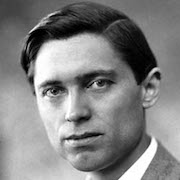
Theodor ("The") Svedberg (30 August 1884 – 25 February 1971) was a Swedish chemist and Nobel laureate, active at Uppsala University.
Early life and education
Theodor Svedberg was born in Gävleborg, Sweden. He was the son of Augusta Alstermark and Elias Svedberg. He earned his Bachelor of Arts degree in 1905, his master's degree in 1907, and in 1908, he earned his Ph.D.
Research
Svedberg's work with colloids supported the theories of Brownian motion put forward by Albert Einstein and the Polish geophysicist Marian Smoluchowski. During this work, he developed the technique of analytical ultracentrifugation, and demonstrated its utility in distinguishing pure proteins one from another.
Awards and honours
The unit svedberg (symbol S), a unit of time amounting to 10−13 s or 100 fs, is named after him, as well as the The Svedberg Laboratory in Uppsala.
Svedberg's candidacy for the Royal Society reads:
"distinguished for his work in physical and colloid chemistry and the development of the ultracentrifuge"