Introduction
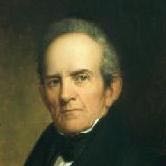
Smith Thompson (January 17, 1768 – December 18, 1843) was a United States Secretary of the Navy from 1819 to 1823, and a United States Supreme Court Associate Justice from 1823 until his death in 1843.
Early life and the law
Born in Amenia, New York, Thompson graduated from Princeton University (then known as the College of New Jersey) in 1788, taught for a short period thereafter, then studied law under James Kent and subsequently set up a law practice. He practiced in Troy, New York from 1792 to 1793, and in Poughkeepsie, New York from 1793 to 1802.
Politics and the court
Smith Thompson was elected to the New York State Assembly in 1800, and attended the New York Constitutional Convention of 1801. He was appointed to the New York State Supreme Court in 1802, serving as Associate Justice from 1802 to 1814, and Chief Justice from 1814 to 1818.
In 1819, Thompson achieved national prominence when he was appointed the 6th Secretary of the Navy by U.S. President James Monroe, and then again in 1823–1824, when he campaigned for the Democratic-Republican Party presidential nomination for the 1824 U.S. presidential election. He would withdraw from his presidential campaign when outcompeted by other candidates.
Thompson only reluctantly accepted his recess appointment to the United States Supreme Court from President James Monroe on September 1, 1823. He was to fill a seat vacated by Henry Brockholst Livingston. Formally nominated on December 5, 1823, Thompson was confirmed by the United States Senate on December 9, 1823, and received his commission the same day. Throughout his time on the court he was a staunch opponent of Chief Justice John Marshall.
In a move now considered unusual, but then quite common, Thompson continued his political ambitions by running for other political offices while still on the bench. However, his 1828 bid for Governor of New York was unsuccessful, unlike the example of Chief Justice John Jay, who successfully ran a three-year campaign while still a Justice, ultimately winning election as New York State governor in 1795. Thereafter, Thompson mostly exited political life.
Justice Smith Thompson remained on the court until his death in Poughkeepsie, New York, on December 18, 1843.
Legacy
In May 1816, Smith Thompson was a founding vice president of the American Bible Society and provided a copy to every officer and enlisted man in the Navy while he was Secretary of the Navy.
In 1919, the USS Smith Thompson (DD-212) was named in honor of him on the occasion of the 100th Anniversary of Smith Thompson becoming the Secretary of the Navy.
Marriages
Smith Thompson married first, Sarah Livingston (1777-1833) daughter of Gilbert Livingston (1742-1806), a law partner of Thompson, and had four children. Second, he married Elizabeth Davenport Livingston (1805-1886), daughter of Henry Livingston Jr. (1748-1828), and had three more children. Gilbert and Henry were siblings, making his wives, Sarah and Elizabeth, first cousins. Sarah Livingston and her husband's Supreme Court predecessor, Henry Brockholst Livingston, were also cousins via their common Livingston family ancestors, Robert Livingston, the Elder (1654-1728) and Alida (née Schuyler) Van Rensselaer (1656–1727) who lived in eastern New York during the 18th century.
One of his sons, Gilbert Livingston Thompson (1796-1874), married Arietta Minthorne Tompkins (1800-1837), daughter of Vice President Daniel D. Tompkins. Their daughter, Arietta Livingston Thompson (1823-1886), was the mother of Guy Vernor Henry and grandmother of Guy Vernor Henry Jr..