

Introduction
Ruth (/ruːθ/; Hebrew: רוּת, Modern Rut, Tiberian Rūθ), is the protagonist of the Book of Ruth in the Hebrew Bible.
Biblical narrative
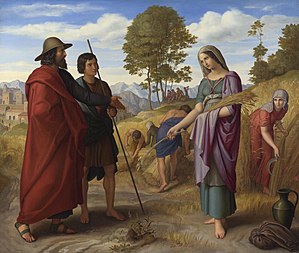
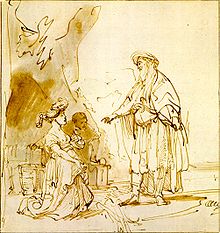
Ruth was a Moabite, who married into the Hebrew family of Elimelech and Naomi, whom she met when they left Bethlehem and relocated to Moab due to a famine. Elimelech and his two sons died, leaving Naomi and her two daughters-in-law as widows. When Naomi decided to return to Bethlehem, Ruth decided to go with her despite the fact that Orpah, Naomi's other daughter-in-law went back home. Ruth famously vowed to follow Naomi in the following passage:
But Ruth said, "Do not urge me to leave you or to return from following you. For where you go I will go, and where you lodge I will lodge. Your people shall be my people, and your God my God. Where you die I will die, and there will I be buried. May the LORD do so to me and more also if anything but death parts me from you.(Ruth 1:16–17, ESV)
Ruth went to glean in the fields, where she met Boaz. At the instigation of Naomi she forced Boaz to declare his intentions regarding Ruth by slipping into the threshing floor at night, uncovering his feet, and lying at his feet (Ruth 3:8) in the Mosaic tradition of having the nearest relative be the kinsman redeemer (Leviticus 25:25–55). Boaz indicated his desire to marry her, and called Ruth a "woman of noble character." After overcoming the obstacle of having a relative with a stronger claim (per the Mosaic requirements in Deuteronomy 25:7–9), Boaz married Ruth, and they had a son, named Obed. The genealogy in the final chapter of the book explains how Ruth became the great-grandmother of David: Boaz begot Obed, Obed begot Jesse and Jesse begot David (Ruth 4:17). In the Christian narrative, she is thus also the ancestor of Joseph (husband of Mary and would-be legal father of Jesus), and is one of the five women mentioned in the genealogy of Matthew 1 (along with Tamar, Rahab, Bathsheba, and Mary).
Character

Katherine D. Sakenfeld argues that Ruth is a model of loving-kindness (hesed): she acts in ways that promote the well-being of others. In Ruth 1:8–18, she demonstrated hesed by not going back to Moab but accompanying her mother-in-law to a foreign land. She chose to glean, despite the danger she faced in the field (Ruth 2:15) and the lower social status of the job. Finally, Ruth agrees with Naomi’s plan to marry Boaz, even though she was free of family obligations, once again demonstrating her loyalty and obedience (Ruth 3:10).
Barry Webb argues that in the book, Ruth plays a key role in Naomi's rehabilitation. Yitzhak Berger suggests that Naomi's plan was that Ruth seduce Boaz, just as Tamar and Lot's daughters all seduced "an older family member in order to become the mother of his offspring." At the crucial moment, however, "Ruth abandons the attempt at seduction and instead requests a permanent, legal union with Boaz."
Jewish perspective
The figure of Ruth is celebrated as a convert to Judaism who understood Jewish principles and took them to heart.
Christian perspective
The connection between Ruth and David is very important because Jesus was born of Mary, betrothed to Joseph of the lineage of David. Thus in Christian lineage, Ruth is a foremother of Jesus.
Ruth is commemorated as a matriarch in the Calendar of Saints of the Lutheran Church - Missouri Synod on July 16.
Other perspectives
Ruth is one of the Five Heroines of the Order of the Eastern Star.
Tomb of Ruth

Francesco Quaresmi in the early 17th century reported that Turks and Orientals generally believed that the structure contained the tombs of Jesse and Ruth. According to Moshe Sharon, the association of the site with Ruth is very late, starting in the 19th century. It receives numerous visitors every year, especially on the Jewish holiday of Shavuot when the Book of Ruth is read. Haim Horwitz in his 1835 book on Israeli holy sites Love of Jerusalem discusses the oral tradition that the tomb houses the grave of Ruth as well as that of Jesse, who is mentioned in earlier writings. Menachem Mendel of Kamenitz wrote in 1839, "Also in the vineyard was a shelter with 2 graves: one of Jesse, father of David, and one of Ruth, the Moabite."
Genealogy: the descent of David from Ruth
|
|
|
|
|
|
|
|
|
|
|
|
|
|
|
|
|
|
|
|
|
|
|
|
|
|
|
|
|
|
|
||||||||||||||||||||||||||
|
|
|
|
|
|
|
|
|
|
|
|
|
|
|
|
|
|
|
|
|||||||||||||||||||||||||||||||||||||
|
|
|
|
|
|
|
|
|
|
|
|
|
|
|
|
|
|
|
Elimelech |
|
Naomi |
|
|
|
||||||||||||||||||||||||||||||||
|
|
|
||||||||||||||||||||||||||||||||||||||||||||||||||||||
|
|
|
|
|
|
|
|
|
|
|
|
|
|
|
|
|
|
|
|
|
|
|
|
|
|
|
|
|
|
|
|
|
||||||||||||||||||||||||
|
|
|
|
|
|
|
|
|
|
|
|
|
|
|
||||||||||||||||||||||||||||||||||||||||||
| Boaz |
|
|
|
Ruth |
|
|
|
Mahlon |
|
|
|
Orpah |
|
|
|
Chilion | |||||||||||||||||||||||||||||||||||||||
|
|
|
|
|
|
|
|
|
|
|
||||||||||||||||||||||||||||||||||||||||||||||
|
|
|
|
|
|
|
|
|
|
|
|
|
|
|
|
|
|
|
|
|
|
|
|
|
|
|
|
|
|
|||||||||||||||||||||||||||
|
|
|
|
Obed |
|
|
|
|
|
|
|
|
|
|
|
|
|
|
|
|
|
|
|
|
|
|||||||||||||||||||||||||||||||
|
|
|
|
|
|
|
|
|
|
|
|
|
|
|
|
|
|
|
|
|
|
|
|
|
|
|
|
|
|
|||||||||||||||||||||||||||
|
|
|
|
Jesse |
|
|
|
|
|
|
|
|
|
|
|
|
|
|
|
|
|
|
|
|
|
|||||||||||||||||||||||||||||||
|
|
|
|
|
|
|
|
|
|
|
|
|
|
|
|
|
|
|
|
|
|
|
|
|
|
|
|
|
|
|||||||||||||||||||||||||||
|
|
|
|
David |
|
|
|
|
|
|
|
|
|
|
|
|
|
|
|
|
|
|
|
|
|
|||||||||||||||||||||||||||||||