


Introduction
Richard Nutley (1670–1729) was an English-born barrister, politician and judge assigned to officialduty in early eighteenth-centuryIreland. Whilst having a fascinating legal and political career, healso enjoyedthefriendshipof Jonathan Swift.
Family
He was the second son of the famed William Nutley, a leadingbarristerof the Middle Temple;his brother, also namedWilliam,had some reputation as a poet.He matriculated from New Inn Hall,University of Oxford in 1688,graduated Bachelor of Arts 1691, andbecame Master of Arts 1694.
Career
He followed his father's pathtothe Middle Temple in 1695 and was called to the Bar in 1698. He went to Ireland in 1699 as secretary to the Royal Commission on Forfeited Estates. He entered the King's Innthe same year,and was elected to the Irish House of Commons as member for Lisburn in 1703. His practice at the Irish Barwas extremely successful: out of his income he was able to pay his brother William, who had become impoverished,a pension of £300 a year.
Judge
The most powerful of his political allies was James Butler, 2nd Duke of Ormonde, head of the great Butler dynastyand twice Lord Lieutenant of Ireland.Nutleyis known to have beenacting as hisfinancial agent in 1703, endeavouring to raise money on the family estates (which wereheavily encumbered with mortgages),and afterwards became hissteward.It wasOrmonde's influence which led to Nutley'selevation to the Court of King's Bench (Ireland)in 1711.
He was a judge ofnotably strongToryviews,which led to serious differences with his colleagues, even though they were generally also inclined to Toryism.Theyaccused him ofoutright falsehood,and of twisting the law in hisjudgmentsfor political ends. As early as 1712 his removal from the Benchwas said to be imminent. Those years saw a bitter dispute between the Crown and Dublin Corporation concerning the appointment of the Lord Mayor of Dublinand other officials: Nutley like all his colleagues on the Bench sided with the Crown, and signed a report justifying the Crown's stance in the matter. Nutley was sent to London in 1714 to explain the judges' conduct.
Official business in Dublin reached adeadlock: much of the blamefor the controversy was placed on the Lord Chancellor of Ireland, Sir Constantine Phipps. Elrington Ball, perhapswith some exaggeration, called Phipps "the pivot on which all debate turned". Nutley could not avoid being drawn into the attacks on Phipps, since the two menwere politically very close: Nutley was unkindly called Phipps' "creature". In 1713 it was rumoured, wrongly, that the new Lord Lieutenant of Ireland,the Duke of Shrewsbury,would make the dismissal of both Phipps and Nutley a condition of his taking up office.
Later life
Nutley managed to retain office until August 1714, when on the death of Queen Anne, the new King George I removed her Irish judges en bloc. Nutley's patronthe Duke of Ormonde nominated him to be deputy steward of Westminster Abbey,but the Dean and Chapter of Westminstervetoed the appointment, and he returned to his practice at the Irish Bar.
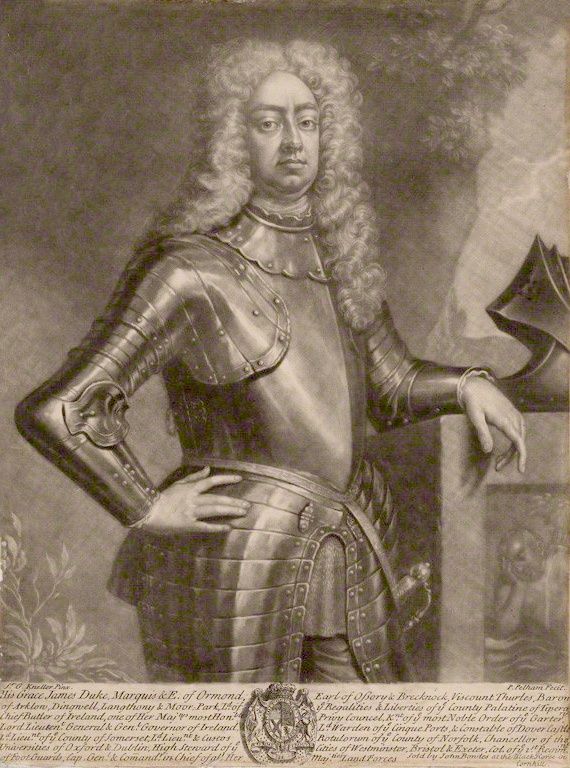
Ormonde's defection to the Jacobitecause,which causedhis flight to France inAugust 1715and the end of his career,was a great blow to Nutley. It was anticipated, wrongly,that he would follow Ormonde into exile, but it seems that hispolitical beliefs were not sufficiently strong for him to give up what was still, despite his loss of office,a comfortablelife in Dublin. In 1719 it was rumoured that he was sheltering the Duke in hishouse at Mary Streetin Dublin, but there seems tohave beenno substance to the report.
In 1716the old controversy between DublinCorporation and the Crown was revived. Nutley was examined by the IrishHouse of Commons on the report he had signed in 1712-3.He insisted thathe had acted impartially,but the Commons passed a resolution recommending that he be impeached. The issue quickly died down:no further action was taken against Nutley,and in 1723 it was suggested that he might be reappointed to the Bench, although nothing came of this.
He died in Dublin of appendicitisin 1729 and was buried in St Mary's Church, Dublin.He married his beloved wife Phillipa Venables in 1708.
Character
Elrington Ball called Nutleya man who brought"much worldly wisdom"to theIrish Bench. He treated his poverty-strickenbrother Williamwith great generosity, andhisfriendly correspondence with Jonathan Swift shows that Swift had astrong personalregard for him.