



Introduction
Olga Konstantinovna Chekhova, born Knipper (Russian: Ольга Константиновна Чехова (14 April 1897, Aleksandropol, Erivan Governorate, Russian Empire (now Gyumri, Armenia) – 9 March 1980, Munich, West Germany) was a Russian-German actress. Her film roles include the female lead in Alfred Hitchcock's Mary (1931).
Biography
Born Olga Knipper, she was the daughter of Konstantin Knipper, a railway engineer and the niece and namesake of Olga Knipper (Anton Chekhov's wife), both Lutherans of ethnic German ancestry. She went to school in Tsarskoye Selo but, after watching Eleonora Duse, joined the Moscow Art Theatre's studio. There she met the great actor Mikhail Chekhov (Anton's nephew) in 1914 and married him the same year, taking his surname as her own. Their daughter, also named Olga, was born in 1916.
During the year of the 1917 October Revolution, Chekhova divorced her husband but kept his name. She managed to get a travel passport from the Soviet government, possibly in exchange for cooperation, which led to permission to leave Russia. She was accompanied by a Soviet agent on a train to Vienna, then she moved to Berlin in 1920. Her first cinema role was in Friedrich Wilhelm Murnau silent movie Schloß Vogelöd (1921). She played in Max Reinhardt's productions at UFA, the same studios where Fritz Lang directed Metropolis (1927). She made the successful transition from silent film to talkies. In the 1930s, she rose to become one of the brightest stars of the Third Reich and was admired by Adolf Hitler. She appeared in such films as Der Choral von Leuthen although she preferred comedies.
Joseph Goebbels
A published photograph of her sitting beside Hitler at a reception gave the leaders of the Soviet intelligence service the impression that she had close contacts with Hitler. She had more contact with the Minister of Propaganda, Joseph Goebbels, who referred to her in his diaries as "eine charmante Frau" ("a charming lady"). She is also rumored to have been a communist spy in a Russian conspiracy. According to the book Killing Hitler (2006), by the British author Roger Moorhouse, she was pressured by Stalin and Beria to flirt with Adolf Hitler in order to gain and transfer information so that Hitler could be killed by secret Soviet agents. Also, the controversial Argentine theater book Hotel Berlin 1933 by Pablo Sodor shows a relationship between Chekhova and Karl Heinrich von Stülpnagel.
Later years
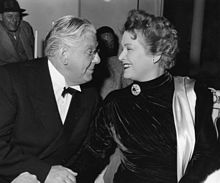
During World War II her acting career was less successful; her one film made in Hollywood was unpopular, largely because her accent was too strong. After the war she lived in the Soviet sector of Berlin, but eventually she managed to escape from her Soviet contacts. In 1949, she moved to Munich, Bavaria, and launched a cosmetics company. At the same time she continued acting, and played supporting roles and cameos in more than 20 films. She largely retired from acting in the 70s, after publishing a book of memoirs. Her correspondence with Russian actors Olga Knipper and Alla Tarasova was published posthumously.
Selected filmography
- Schloß Vogelöd (1921)
- Violet (1921)
- Hochstapler (1921)
- Nora (1923)
- The Lost Shoe (1923)
- Tatjana (1923)
- The Venus of Montmartre (1925)
- The Old Ballroom (1925)
- The Fallen (1926)
- Trude (1926)
- The Schimeck Family (1926)
- His Toughest Case (1926)
- The Man in the Fire (1926)
- The Mill at Sanssouci (1926)
- His Late Excellency (1927)
- Aftermath (1927)
- The Italian Straw Hat (1927)
- Pawns of Passion (1928)
- Moulin Rouge (1928)
- Woman in Flames (1928)
- After the Verdict (1929)
- Darling of the Gods (1930)
- The Three from the Filling Station (1930)
- The Road to Paradise (1930)
- Mary (1930)
- The Great Longing (1930)
- Love in the Ring (1930)
- Panic in Chicago (1931)
- The Concert (1931)
- Night Convoy (1932)
- Trenck (1932)
- Der Choral von Leuthen (1932)
- Liebelei (1932)
- The Country Schoolmaster (1933)
- A Love Story (1933)
- Die Welt ohne Maske (1934)
- Peer Gynt (1934)
- Maskerade (1934)
- Regine (1935)
- Asew (1935)
- Künstlerliebe (1935)
- The Eternal Mask (1935)
- Ein Walzer um den Stephansturm (1935)
- The Empress's Favourite (1936)
- His Daughter is Called Peter (1936)
- Petersburger Romanze (1936)
- Burgtheater (1936)
- Hannerl and Her Lovers (1936)
- Unter Ausschluß der Öffentlichkeit (1937)
- Liebe geht seltsame Wege (1937)
- Gewitterflug zu Claudia (1937)
- Die gelbe Flagge (1937)
- Red Orchids (1938)
- Die unheimlichen Wünsche (1939)
- Ich verweigere die Aussage (1939)
- Parkstraße 13 (1939)
- Bel Ami (1939)
- Liberated Hands (1939)
- Angelika (1940)
- Leidenschaft (1940)
- The Fox of Glenarvon (1940)
- Menschen im Sturm (1941)
- Mit den Augen einer Frau (1942)
- Andreas Schlüter (1942)
- Reise in die Vergangenheit (1943)
- Gefährlicher Frühling (1943)
- Der ewige Klang (1943)
- Im Tempel der Venus (1945)
- Eine Nacht im Séparée (1949)
- Kein Engel ist so rein (1950)
- Der Mann, der zweimal leben wollte (1950)
- Maharadscha wider Willen (1950)
- Eine Frau mit Herz (1950)
- Zwei in einem Anzug (1950)
- Aufruhr im Paradies (1950)
- Das Geheimnis einer Ehe (1951)
- My Friend the Thief (1951)
- Begierde (1951)
- Behind Monastery Walls (1952)
- Alles für Papa (1953)
- Rose-Girl Resli (1954)
- Captain Wronski (1954)
- U 47 – Kapitänleutnant Prien (1958)
- Jack und Jenny (1963)
- Die Zwillinge vom Immenhof (1973)
- Frühling auf Immenhof (1974)
References and notes
- Beevor, Antony (2004) The Mystery of Olga Chekhova: was Hitler's favorite actress a Russian spy? ISBN 0-670-03340-5