
Introduction
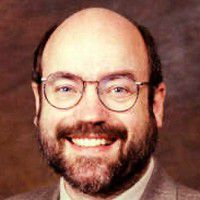
Mark D. Weiser (July 23, 1952 – April 27, 1999) was a chief scientist at Xerox PARC in the United States. Weiser is widely considered to be the father of ubiquitous computing, a term he coined in 1988.
Biography
Weiser was born in Harvey, Illinois to David W. Weiser and Audra H. Weiser. He was a descendant of Conrad Weiser. Weiser entered New College of Florida in 1970, but did not remain at that institution to graduate. He studied Computer and Communication Science at the University of Michigan, receiving an M.A. in 1977 and a Ph.D. in 1979. He was known to comment that he bypassed the bachelor's degree on the way to his Ph.D. He then spent eight years teaching computer science at the University of Maryland, College Park.
While Weiser worked for a variety of computer related startups, his seminal work was in the field of ubiquitous computing while leading the computer science laboratory at PARC, which he joined in 1987. His ideas were significantly influenced by his father's reading of Michael Polanyi's "The Tacit Dimension". He became head of the computer science laboratory in 1988 and chief technology officer in 1996, authoring more than eighty technical publications.
In addition to in the field of computer science, Weiser was also the drummer for Severe Tire Damage.
In 1999, Weiser was diagnosed with stomach cancer and given 18 months to live. Weiser died six weeks later, on April 27, 1999. His younger sister, Mona Weiser Holmes (1953–1999) predeceased him by three weeks. His surviving sister is Ann Weiser Cornell (b. 1949). He was married to Victoria Reich. His daughters are Nicole Reich-Weiser (b. June 23, 1977) and Corinne Reich-Weiser (b. August 16, 1981).
The Mark D. Weiser Excellence in Computing Scholarship Fund at the University of California, Berkeley, is awarded to undergraduate computer science students in Weiser's honor. Since 2001, the Association for Computing Machinery's special interest group in operating systems (SIGOPS) has given the annual Mark Weiser Award to a researcher not more than 20 years into their career who has made "contributions that are highly creative, innovative, and possibly high-risk, in keeping with the visionary spirit of Mark Weiser."
Ubiquitous computing and calm technology
Ubiquitous computing names the third wave in computing, just now beginning. First were mainframes, each shared by lots of people. Now we are in the personal computing era, person and machine staring uneasily at each other across the desktop. Next comes ubiquitous computing, or the age of calm technology, when technology recedes into the background of our lives.
— Mark Weiser
During one of his talks, Weiser outlined a set of principles describing ubiquitous computing:
- The purpose of a computer is to help you do something else.
- The best computer is a quiet, invisible servant.
- The more you can do by intuition the smarter you are; the computer should extend your unconscious.
- Technology should create calm.
In Designing Calm Technology, Weiser and John Seely Brown describe calm technology as "that which informs but doesn't demand our focus or attention."
Low-powered portable computing
Weiser advocated to look at performance in non traditional ways. Instead of measuring computational performance in MIPS, he focused on increasing the instructions per joule of energy, pushing the computer industry toward low-powered portable computing.
Works
- "The Computer for the 21st Century" - Scientific American Special Issue on Communications, Computers, and Networks, September, 1991