

Introduction
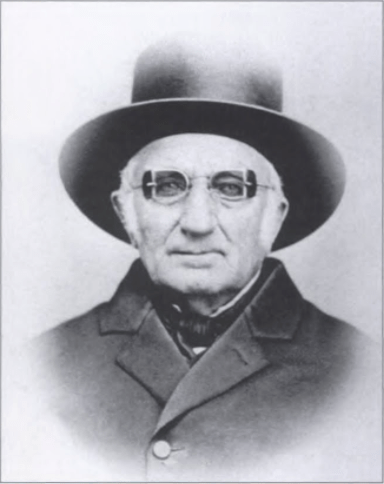
John Rogers Cooper (September 11, 1791, Alderney, British Channel Islands – June 2, 1872, San Francisco, California), later known as Juan Bautista Rogers Cooper, was a 19th century pioneer of California, who held British, Mexican, and finally American citizenship. Raised in Massachusetts in a maritime family, he came to the Mexican territory of Alta California as master of the ship Rover, and was a pioneer of Monterey, California when it was the capital of the territory. He converted to Catholicism, became a Mexican citizen, and married the daughter of the Mexican territorial governor and acquired extensive land holdings in the area prior to the Mexican–American War.
Early life
John (Juan) Bautista Rogers Cooper was born on the island of Alderney, Guernsey, in the British Channel Islands, son of Thomas Cooper and Anne Rogers. His father, from Christchurch, Hampshire, England was lost at sea with his ship when John was 8 years old. His mother and John relocated to Boston, Massachusetts when he was a boy. His mother married Thomas Larkin, and Cooper was a half-brother of prominent businessman and the United States' first and only consul to Mexican Alta California, Thomas O. Larkin.
After moving to Boston with his mother, he traveled extensively, first attending school in Charleston and then serving as second mate on a missionary trip to the Hawaiian Islands. He arrived in Monterey, Alta California as master of his own vessel, the trading schooner Rover, in 1823.
Cooper married Maria Jerónima de la Encarnación Vallejo, the daughter of Ignacio Vicente Ferrer Vallejo, on August 24,1827, atSan Carlos Mission.
Monterey
Upon his arrival in Monterey, Cooper made arrangements to sell the Rover to the government of newly independent Mexico, which as yet had no ships on the Pacific Coast with which to maintain contact with Alta California. To help cash-poor California governor Luis Arguello pay him for the ship, Cooper agreed to stay on as captain and enter the lucrative China trade, twice carrying Californian and Hawaiian goods to Canton and returning with Chinese manufactured goods. Cooper and Arguello quarreled, however, over how to split the profits, and it was many years before Cooper received the payment due. Collection was made more difficult when Arguello was replaced as governor in 1825. In 1826, the Rover was sent south under a new captain, and never returned to Monterey.
Moving on from maritime occupations, Cooper drew on his knowledge of trade to open a general merchandise store in Monterey. He boarded with the family of hl Ignacio Vicente Ferrer Vallejo.General Vallejo, a prominent family of Castillean descent. One of their children was General Mariano Guadalupe Vallejo. In 1827 Cooper proposed to Vallejo's daughterMaria Jerónima de la Encarnación Vallejo.
To marry her, Cooper was baptized as a Roman Catholic and adopted the baptismal name of Juan Bautista Rogers Cooper. His padrino (sponsor) was William Edward Petty Hartnell, a native Englishman who had been residing in Monterey as a trader since 1822. The couple married in 1827.
After passage of an 1829 law requiring permanent residents to be Mexican citizens, both Cooper and Hartnell were naturalized in 1830. Before 1829, naturalization was not strictly required but, along with conversion to Catholicism and marriage into a prominent family, helped Cooper become accepted in Monterey and obtain land grants. Cooper worked tirelessly along with his half-brother Thomas Larkin to help California join the union.
Cooper later returned to the seafaring life but, having acquired land, he gradually quit the sea. From 1839 to 1844 he made many trips to the Mexican coast and to the Hawaiian Islands, in command of the government-owned Californian, which carried mail, prisoners, and government officials from Monterey to Mexico. In 1846 he made a voyage to Peru, and in 1849 he went as master of the Eveline to China.
Assistance to Jedediah Smith
Because Monterey was the territorial capital and port of entry, anyone enteringAlta California had to come to Monterey to get official permission to remain. In 1827, Cooper hosted and escorted trapper/explorer Jedediah Smith, the first U.S. citizen to travel to California overland. Cooper helped Smith obtain a passport so his party could continue north into Oregon.
Land grants
In 1829 Cooper bought 7,000 acres (2,800 ha) ofRancho Bolsa del Potrero y Moro Cojo (Pocket of the Pasture and the Lame Moor and La Sagrada Familia or The Holy Family) from Joaquín de la Torre for $2,000 (equivalent to $55,000 in 2019 dollars), to whom it had originally been granted. The rancho was located between the Salinas River and the Tembladero Slough, near present-day Castroville in the Salinas Valley.Although Cooper did not receive legal possession until 1840, he was involved in managing the ranch as early as 1834, when he contracted with Job Dyeto raise mules on the property.
Governor José Figueroagranted John B.R. Cooper Rancho El Molino (about 17,892-acre (72.41 km)) in present-day Sonoma County, California in 1833, whichwas confirmed by Governor Nicolás Gutiérrez in 1836.
Juan Bautista Alvarado received a grant to Rancho El Sur (about two leagues of land, or roughly 8,880 acres (3,590 ha) in 1834 from Governor Jose Figueroa. In 1840, Alvarado and Cooper traded ownership, with Alvarado gaining Rancho El Sur and Cooper the more accessible and readily farmed 22,000-acre (89.03 km) Rancho Bolsa del Potrero y Moro Cojo. Alvarado was a nephew of Encarnacion Vallejo Cooper. Also in 1840, Governor Alvarado granted Cooper Rancho Punta de Quentin, which later became the site of San Quentin State Prison. Cooper built a mansion on the point. Cooper and Pablo de la Guerra were granted Rancho Nicasio by Governor Manuel Micheltorena in 1844. Cooper sold his interests in both Marin County ranchos in 1850.
Final years
From 1850, Captain Cooper lived with his family in Monterey, and was appointed in 1851 to the post of Monterey Harbormaster. In 1864 he and his wife moved to San Francisco, where they built a home located at 821 Bush St. Cooper died in 1872. Their daughter Ana Maria de Guadalupe married Herman Wohler, a German who had come to California in 1848, and their daughter Amelia married Eusebio Joseph Molera in 1875. The rancho was divided between the two sisters and their son John Baptist Henry Cooper.
John B. H. Cooper built a new home on his portion of Rancho El Sur Ranch but died on June 21, 1899, before he could move in. His wife Martha received 2,591 acres (1,049 ha) of her husband's estate totaling about 10,000 acres (4,000 ha), and over time bought the remainder from her husband's two sisters. Martha ran a successful cattle and dairy operation. She married James Joseph Hughes of San Francisco in about 1918. In 1928 she sold 5,000 acres (2,000 ha) to businessman Harry Cole Hunt of Carmel-by-the-Sea. He had been president of the Tidewater Oil Company and a director of Dabney and Hogan Petroleum Companies. He and with his wife Jane Selby (nee Hayne) owned the El Sur Ranch.
Martha died on May 23, 1940 in Monterey, California. Funeral services were held the Royal Presidio Chapel in Monterey at San Carlos Church.