
Introduction
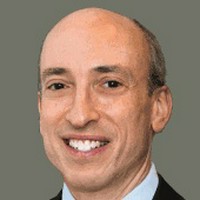
Gary Gensler (born October 18, 1957) is Professor of the Practice of Global Economics and Management, MIT Sloan School of Management, Co-Director of MIT’s Fintech@CSAIL and Senior Advisor to the MIT Media Lab Digital Currency Initiative. He also is an American public official and currently leads the Biden-Harris transition agency review team responsible for the Federal Reserve, Banking and Securities Regulators group.
Gensler previously served as the 11th chairman of the Commodity Futures Trading Commission under President Barack Obama from May 26, 2009, to January 3, 2014. He was the Under Secretary of the Treasury for Domestic Finance (1999-2001), and the Assistant Secretary of the Treasury for Financial Markets (1997-1999). Prior to his public service career, Gensler worked at Goldman Sachs, where his last position was that of Co-head of Finance. He was the chief financial officer for Hillary Clinton's presidential campaign.
While serving as chairman of the CFTC, Gensler reorganized the watchdog efforts of the 700-person agency. Gensler led the effort to pass and implement comprehensive oversight of the $400 trillion swaps market, a form of over-the-counter derivative that was at the center of the 2008 financial crisis.
On January 12, 2021, it was reported that Joe Biden will nominate Gensler to serve as 33rd Chair of the U.S. Securities and Exchange Commission.
Early life and education
Gensler was born in Baltimore, Maryland, one of five children of Jane (née Tilles) and Sam Gensler.Sam Gensler was a cigarette and pinball machine vendor to local bars, and he provided Gensler with his first exposure to the real-world side of finance when Sam would take Gensler to the bars of Baltimore to count nickels from the vending machines.
Gensler graduated from Pikesville High School in 1975, where he was later given a Distinguished Alumnus award. Gensler graduated with a degree in economics, summa cum laude, after three years at the Wharton School at the University of Pennsylvania , followed by a master's in business administration the following year. Gensler's identical twin brother also studied at the University of Pennsylvania. As an undergraduate, Gensler joined the University of Pennsylvania crew team as a coxswain, dropping his weight to 112 pounds to keep the boat at its proper weight.
Business career
In 1979, Gensler joined the Wall Street investment bank Goldman Sachs, where he spent 18 years.At 30, Gensler became one of the youngest persons to have made partner at the firm at the time.He spent the 1980s working as a top mergers and acquisitions banker, having assumed responsibility for Goldman's efforts in advising media companies.He subsequently made the transition to trading and finance in Tokyo, where he directed the firm's Fixed Income and Currency trading.
While at Goldman Sachs, Gensler led a team that advised the National Football League in capturing the then-most lucrative deal television history, when the NFL secured $3.6 billion deal selling television sports rights.
Gensler's last role at Goldman Sachs was Co-head of finance, responsible for controllers and treasury worldwide.Gensler left Goldman after 18 years when he was nominated by President Bill Clinton and confirmed by the U.S. Senate to be the Assistant Secretary of the Treasury.
Gensler served on the board of for-profit university Strayer Education, Inc. from 2001 to 2009.
Public service
In November 2020, Gensler was named a volunteer member of the Joe Biden presidential transition Agency Review Team to support transition efforts related to the Federal Reserve, Commodity Futures Trading Commission, the Federal Deposit Insurance Corporation, the National Credit Union Administration, and the Securities and Exchange Commission.
Treasury Department
Gensler served in the United States Department of the Treasury as Assistant Secretary for Financial Institutions from 1997-1999, then as Undersecretary for Domestic Finance from 1999-2001.As Assistant Secretary, Gensler served as a senior advisor to the Secretary of the Treasury in developing and implementing the federal government's policies for debt management and the sale of U.S. government securities. In 1999 and 2000, under then-Treasury Secretary Lawrence Summers, Gensler fought for passage of the Commodity Futures Modernization Act, which exempted over-the-counter derivatives from regulation.
As Undersecretary of the Treasury for Domestic Finance, Gensler advised and assisted Treasury Secretaries Robert Rubin and Lawrence Summers on aspects of domestic finance, including formulating policy and legislation in the areas of financial institutions, public debt management, capital markets, government financial management services, federal lending, fiscal affairs, government sponsored enterprises, and community development.
While serving at the Treasury Department, Gensler was awarded the agency's highest honor, the Alexander Hamilton Award, for his service.
Sarbanes-Oxley
In 2001, Gensler joined the staff of U.S. Senator Paul Sarbanes, Chairman of the Senate Banking Committee, as a senior advisor and helped write the Sarbanes-Oxley law, which tightened accounting standards in the wake of the Enron and WorldCom scandals.Sen. Sarbanes described Gensler as "a very good strategic advisor," who "is very gifted at putting politics and substance together."
CFTC
Then-President-Elect Barack Obama nominated Gensler to serve as the 11th Chairman of the CFTC on December 18, 2008.After some initial opposition to Gensler's nomination amongst the progressive members of the Democratic caucus, Gensler was approved by the U.S. Senate in an 88-6 confirmation vote.Gensler was sworn in on May 26, 2009, pledging to work to "urgently close the gaps in our laws to bring much-needed transparency and regulation to the over-the-counter derivatives market to lower risks, strengthen market integrity and protect investors."According to Gensler, "[o]nly through strong, intelligent regulation – coupled with aggressive enforcement mechanisms – can we fully protect the American people and keep our economy strong."
Gensler has been credited with taking the CFTC - a once-sleepy and hands-off regulator - and thrusting it into the front lines of reform.Gensler was described as "one of the leading reformers after the financial crisis."
Swaps
During Gensler's tenure at the CFTC, he worked closely with the Obama Administration, United States Congress and other regulators to transform the $400 trillion financial derivatives markets that were at the center of the 2008 financial crisis.Upon becoming chairman, Gensler began leading the Obama Administration's effort "to start policing the Wild West of finance: the murky market for over-the-counter derivatives."When the Treasury Department released draft legislation to bring regulatory oversight to the swaps market, Gensler sent a letter to Congress arguing that the proposal did not go far enough.
Immediately after taking the helm of the CFTC, Gensler advocated for a three-prong approach to regulating swaps: (1) Bringing transparency to the markets through electronic trading platforms, (2) requiring that trades be processed through derivatives clearinghouses to lower risk to the financial system, and (3) for the first time, regulating the financial entities that deal in swaps.
By the spring of 2010, the momentum in Congress was toward Gensler's vision for derivatives oversight, and Congress passed comprehensive reform as part of the Dodd-Frank Wall Street Reform and Consumer Protection Act in July 2010.
After the passage of the Dodd-Frank Act, Gensler led the CFTC's effort to write the rules required to regulate the swaps markets.He oversaw the agency as it wrote 68 new rules, orders and guidances and as its reach extended from a $35 trillion futures market to a $400 trillion swaps market.Under Gensler, the bipartisan commission reached unanimous votes to approve more than 70 percent of the agency's rulemakings.By the time Gensler left the CFTC in January 2014, the agency was near completion of the rule-writing process to implement the Dodd-Frank Act.
Enforcement and Libor investigation
Gensler led a revitalization of the enforcement division of the agency, most notably in its prosecution of an enforcement case regarding manipulation of Libor, the London interbank offered rate.
Early in his tenure, Gensler listened to tape recordings of two Barclays employees as they discussed plans to report false interest rates in an effort to manipulate Libor.Libor is the average interest rate estimated by leading banks in London that the average leading bank would be charged if borrowing from other banks.It is used as a reference rate for many financial products, including adjustable rate mortgages, student loans, and car payments.
"A driving force behind the latest crackdown tied to LIBOR," Gensler worked with enforcement division director David Meister and his team to lead the investigative effort and brought charges against five financial institutions for the manipulation of Libor and other benchmark interest rates, resulting in more than $1.7 billion in penalties.Barclays alone paid $450 million in fines as a result of the Libor investigation.Gensler has called Libor "unsustainable" and argued that it should be replaced as a benchmark rate.
Frankel Fiduciary Prize
For his work to reform the financial regulatory system, The Institute for the Fiduciary Standard awarded Gensler with the 2014 Tamar Frankel Fiduciary Prize.
Maryland Financial Consumer Protection Commission
In 2017, Gensler was selected by the Maryland Senate President and House Speaker to serve as Chairman of the Maryland Financial Consumer Protection Commission, which assessed the impact of potential changes to federal financial industry laws, regulations, budgets, and policies on the state. Under Gensler's leadership, the Commission recommended changes to State law to enhance consumer financial protections, including enhancing standards of care, clarifying State law to set standards for student loan servicers, and protecting Maryland buyers of manufactured homes. In 2018, student loan legislation recommended by the Commission established a student loan ombudsman, added the federal Military Lending Act and the federal Servicemembers Civil Relief Act to state law, increased civil monetary penalties for violations, and codified some modifications on debt collection laws. In 2019, the state enacted additional Commission-recommended legislation to create a Student Borrower Bill of Rights to protect students from predatory practices.
Author
Outside of Gensler's business and public service career, Gensler has co-authored a book with Greg Baer, a fellow Clinton Administration alum, The Great Mutual Fund Trap. The book uses empirical data to show that the average mutual fund consistently underperforms the market.The book argues that actively-traded mutual funds carry high fees and lower-than-market returns, and investors should instead rely on low-fee index funds rather than constantly attempt to beat the market.
Political involvement
Gensler served as treasurer of the Maryland Democratic Party for two years, and holding several senior roles on the Maryland campaigns of U.S. Senator Barbara Mikulski, former Lt. Gov. Kathleen Kennedy Townsend, and Gov. Martin O'Malley.During the 2008 presidential campaign cycle, Gensler served as a senior advisor to Hillary Clinton's presidential campaign and later advised the Obama campaign. In May 2015, Gensler was named chief financial officer of Clinton's campaign for president.
Academic
Gensler is Professor of the Practice of Global Economics and Management, MIT Sloan School of Management, Co-Director of MIT’s Fintech@CSAIL and Senior Advisor to the MIT Media Lab Digital Currency Initiative. He focuses on the intersection of finance and technology, conducts research and teaches on blockchain technology, digital currencies, financial technology, and public policy. He is a member of the New York Fed Fintech Advisory Group, a group of experts in financial technology that regularly presents views and perspectives on the topic to the president of the New York Fed.
He won the MIT Sloan Outstanding Teacher Award based upon student nominations for the 2018-19 academic year.
Personal life
Gensler lives in Baltimore with his three daughters, Anna, Lee and Isabel.Gensler was married to filmmaker and photo collagist Francesca Danieli from 1986 until her death from breast cancer in 2006.
Gensler is a runner and has finished nine marathonsand one 50-mile ultramarathon.He also is a mountain climber, having summited Mt. Rainier and Mt. Kilimanjaro.