


Introduction
Emperor Reizei (冷泉天皇, Reizei-tennō, June 12, 950 – November 21, 1011) was the 63rd emperor of Japan, according to the traditional order of succession.
Reizei's reign spanned the years from 967 through 969.
Traditional narrative
Before his ascension to the Chrysanthemum Throne, his personal name (his imina) was Norihira-shinnō (憲平親王).
Norihira-shinnō was the second son of Emperor Murakami. His mother, Empress Yasuko, was a daughter of minister of the right Fujiwara no Morosuke. Soon after his birth he was appointed as crown prince. This decision was supposedly made under the influence of Morosuke and his brother Fujiwara no Saneyori who had seized power in the court.
From ancient times, there have been four noble clans, the Gempeitōkitsu (源平藤橘). One of these clans, the Minamoto clan (源氏) are also known as Genji, and of these, the Reizei Genji (冷泉源氏) are descended from 63rd emperor Reizei.
Events of Reizei's reign
Questions about mental illness made Norihira-shinnō's succession somewhat problematic.
In 967 his father Murakami died and Reizei ascended to the throne at the age of eighteen.
- July 5, 967 (Kōhō 4, 25th day of the 5th month): In the 16th year of Emperor Murakami's reign (村上天皇十六年), he died; and the succession (‘‘senso’’) was received by his second son. Shortly thereafter, Emperor Reizei is said to have acceded to the throne (‘‘sokui’’).
- 969 (Anna 2): Reizei abdicated; and he took the honorific title of Reizei-in Jōkō. His reign lasted for just two years; and he lived another 44 years in retirement.
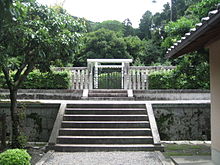
- November 21, 1011 (Kankō 8, 24th day of the 10th month): Daijō-tennō Reizei-in Jōkō died at age 62.
The actual site of Reizei's grave is known. This emperor is traditionally venerated at a memorial Shinto shrine (misasagi) at Kyoto.
The Imperial Household Agency designates this location as Reizei's mausoleum. It is formally named Sakuramoto no misasagi
Kugyō
Kugyō (公卿) is a collective term for the very few most powerful men attached to the court of the Emperor of Japan in pre-Meiji eras.
In general, this elite group included only three to four men at a time. These were hereditary courtiers whose experience and background would have brought them to the pinnacle of a life's career. During Go-Toba's reign, this apex of the Daijō-kan included:
- Kampaku, Ōno-no-miya Fujiwara no Saneyori (藤原実頼), 900–970.
- Daijō-daijin, Fujiwara Saneyori.
- Sadaijin, Minamoto no Takaakira (源高明) (relegated in 969 by Anna Incident)
- Sadaijin, Fujiwara Morotada (藤原師尹)
- Udaijin, Fujiwara Morotada (藤原師尹), 920–969.
- Naidaijin (not appointed)
- Dainagon, Fujiwara no Arihira (藤原在衡)
- Dainagon, Minamoto no Kaneakira (源兼明)
- Dainagon, Fujiwara no Koretada (藤原伊尹)
Eras of Reizei's reign
The years of Reizei's reign are more specifically identified by more than one era name or nengō.
- Kōhō (964–968)
- Anna (968–970)
Consorts and Children
Empress: Imperial Princess Masako (昌子内親王) (950–999), daughter of Emperor Suzaku
Nyōgo: Fujiwara no Fushi/Yoshiko (藤原怤子) (?–?), daughter of Fujiwara no Morosuke (藤原師輔);later, Naishi-no-Kami (尚侍) 982–989
Nyōgo: Fujiwara no Kaishi/Chikako (藤原懐子) (945–975), daughter of Fujiwara no Koretada (藤原伊尹)
- Imperial Princess Sōshi (宗子内親王) (964–986)
- Imperial Princess Sonshi (尊子内親王) (966–985), 15th Saiin in Kamo Shrine 968–975; later, married to Emperor En'yū in 980
- Imperial Prince Morosada (師貞親王) (968–1008) (Emperor Kazan)
Nyōgo: Fujiwara no Chōshi/Tōko (藤原超子) (?–982), daughter of Fujiwara no Kaneie (藤原兼家)
- Imperial Princess Mitsuko (光子内親王) (973–975)
- Imperial Prince Okisada (居貞親王) (976–1017) (Emperor Sanjō)
- Imperial Prince Tametaka (為尊親王) (977–1002)
- Imperial Prince Atsumichi (敦道親王) (981–1007)