


Introduction
David H. Gorski is an American surgical oncologist, Professor of surgery at Wayne State University School of Medicine, and a surgical oncologist at the Barbara Ann Karmanos Cancer Institute, specializing in breast cancer surgery. He is an outspoken skeptic. He is also a critic of alternative medicine and the anti-vaccination movement. He is the author of a blog, Respectful Insolence, and is the managing editor of the website Science-Based Medicine.
Early life
Gorski received his M.D. from the University of Michigan in 1988. He then completed his residency in general surgery at the University Hospitals of Cleveland, taking time off to acquire a Ph.D. in cellular physiology from Case Western Reserve University in 1994 with a dissertation entitled: "Homeobox Gene Expression and Regulation in Vascular Myocytes". After completing his residency, he completed a research fellowship in surgical oncology at the University of Chicago.
Career
Gorski was previously Assistant Professor of Surgery at the Cancer Institute of New Jersey and the UMDNJ-Robert Wood Johnson Medical School in New Brunswick, NJ, as well as a member of the Joint Graduate Program in Cell & Developmental Biology at Rutgers University in Piscataway, NJ and The Cancer Institute of New Jersey. He became the Medical Director of the Alexander J. Walt Comprehensive Breast Center at the Barbara Ann Karmanos Cancer Institute in 2010 and was appointed co-director of the Michigan Breast Oncology Quality Initiative in 2013. Gorski is a Professor of Surgery and Oncology at the Wayne State University School of Medicine, whose laboratory conducts research on transcriptional regulation of vascular endothelial cell phenotype, as well as the role of metabotropic glutamate receptors in breast cancer. He is the cancer liaison physician for the American College of Surgeons Committee on Cancer, the founder of the Institute for Science in Medicine and a member of the American Society of Clinical Oncology.
In 2007 Gorski received the Advanced Clinical Research Award in Breast Cancer from the American Society of Clinical Oncology. Gorski was also awarded research grants by The Breast Cancer Research Foundation in 2008, 2009, and 2010.
Research
Gorski's article, "Blockade of the vascular endothelial growth factor stress response increases the antitumor effects of ionizing radiation", characterizing the effects of angiogenesis inhibitors on the effectiveness of anti-tumor therapies has been cited over 900 times according to PubMed. This research has been used in anti-tumor therapeutic research, including an observation that angiogenesis inhibitors enhanced the therapeutic effects of ionizing radiation "by preventing repair of radiation damage to endothelial cells," and in determining the potential of combinational therapies to allow reduction of the dosages required in toxic conventional treatments while sustaining tumor regression when combined with specific antibodies and radiative therapies.
Gorski's work with Helena Mauceri and others, published in Nature as "Combined effects of angiostatin and ionizing radiation in antitumour therapy" studied the "combined effects of angiostatin" (a protein occurring in several animal species) "and ionizing radiation in anti-tumor therapy" led to investigation into the selective destruction of tumor cells, which according to a study by Gregg L. Semenza (citing Mauceri and others), "are more hypoxic than normal cells," allowing for "tumor cells to be killed without major systemic side effects."
His article with Yun Chen "Regulation of angiogenesis through a microRNA (miR-130a) that down-regulates antiangiogenic homeobox genes GAX and HOXA5" investigated into the use of microRNA to regulate angiogenesis led to research by Jason E. Fish's group at the University of California, San Francisco, into the use of microRNA to regulate blood vessel development, and thus limiting tumor growth. Citing Chen and Gorski's research, Fish wrote that "several broadly expressed microRNAs regulate in vitro endothelial cell behavior, including proliferation, migration, and the ability to form capillary networks", and sought to describe the in vivo functionality of a specific set of microRNAs and their targets; the group was able to isolate a particular microRNA (miR-126) as the most highly enriched in endothelial cells.
Skepticism of CAM
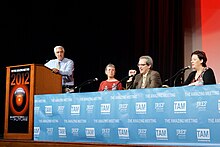
Gorski is a skeptic of complementary and alternative medicine (CAM). In 2004, Gorski, under the pen name Orac, began writing a blog entitled Respectful Insolence at Blogspot and it was moved to the ScienceBlogs website two years later. In 2008 Gorski used his real name when he started blogging at Science-Based Medicine (he continues to use Orac for Respectful Insolence). He is currently their managing editor, and has posted on issues at the intersection of medicine and pseudoscience, including the anti-vaccination movement, alternative therapies, and cancer research and treatment. Gorski recounted how in 2010 members of the anti-vaccine blog Age of Autism wrote to the board of directors at Wayne State University and asked that he be prevented from blogging.
Gorski contributed to the James Randi Education Foundation's series of EBooks: Science Based Medicine Guides. He is also a fellow of the Committee for Skeptical Inquiry. He was a speaker at The Amaz!ng Meeting in 2009, 2010, 2012 and 2013. He has also participated in numerous panels on alternative medicine. He called attention to a paper by John P. A. Ioannidis on problems with published research. Gorski has commented on the increasing infiltration of pseudoscience in the medical field with the use of alternative therapies, acupuncture, detoxification alternative medicine, and dietary treatment of autism.
He advocates for openness of the results of clinical trials and the use of only evidence-based medicine to treat diseases. He has been critical of Senator Tom Harkin's support of the National Center for Complementary and Alternative Medicine (NCCAM). He has criticized the National Institutes of Health (NIH) and NCCAM for funding and publishing research on unproven therapies not supported by science-based evidence, and has commented on medical ethics and methods of alternative medicine.
Gorski criticized popularization of pseudoscience by the media and celebrities such as Oprah Winfrey, Bill Maher, Ann Coulter, and The Huffington Post. In June 2013 Gorski said he supported healthcare professionals speaking out against poor medical practices and the sale of unproven treatments. Gorski was interviewed by WPRR in 2012. He called the co-sponsorship of Integrative Medicine Day by the American Medical Students Association "quackademic medicine" and was described by the pro-CAM science writer David H. Freedman among: "prickly anti-alternative-medicine warriors." In 2014, Gorski and fellow skeptic Steven Novella published an article denouncing the study of integrative medicine as harmful to science.
Views on other medical issues
Gorski has been vocally critical of right-to-try laws, which expand access to experimental drugs for terminally ill patients. He has also voiced skepticism of the theory that atavism played a role in the evolution of cancer.