

Introduction
Claudia Sheinbaum Pardo (born 24 June 1962) is a Mexican politician, scientist, and academic. She was a candidate for President of Mexico in the 2024 Mexican general election and is currently the President-elect of Mexico. She is a member of the left-wing political party Morena. Sheinbaum served as Head of Government of Mexico City, a position equivalent to that of a state governor, from 2018 to 2023.
From 2000 to 2006, Sheinbaum served as Secretary of the Environment under future president Andrés Manuel López Obrador during his tenure as Head of Government. Sheinbaum served as Delegational Chief of the Tlalpan borough from 2015 to 2017 and was elected Head of Government in the 2018 election, where she ran a campaign that emphasized curbing crime and enforcing zoning laws.
A scientist by profession, Sheinbaum received her Ph.D. in energy engineering from the National Autonomous University of Mexico (UNAM). As an academic, she has authored over 100 articles and two books on energy, the environment, and sustainable development. Sheinbaum contributed to the Intergovernmental Panel on Climate Change, and in 2018 she was listed as one of BBC's 100 Women.
On 12 June 2023, Sheinbaum resigned from her position as head of government of Mexico City to seek Morena's presidential nomination in the 2024 election. After she assumes office, she will be the first female president of Mexico and first person from a Jewish background to be elected president of Mexico. On 6 September, Sheinbaum secured the party's nomination over her nearest rival, former foreign secretary Marcelo Ebrard. Polling conducted in 2023 found Sheinbaum to be favored in the 2024 election.
Early life
Claudia Sheinbaum Pardo was born to a secular Jewish family in Mexico City. Her paternal Ashkenazi grandparents emigrated from Lithuania to Mexico City in the 1920s, while her maternal Sephardic grandparents emigrated there from Plovdiv, Bulgaria, in the early 1940s to escape the Holocaust. She celebrated all the Jewish holidays at her grandparents' homes.
Both of her parents are scientists: her mother, Annie Pardo Cemo, is a biologist and professor emeritus of the Faculty of Sciences at the National Autonomous University of Mexico, and her father, Carlos Sheinbaum Yoselevitz, was a chemical engineer. Her brother Julio is a physicist.
Academic career
Sheinbaum studied physics at the National Autonomous University of Mexico (UNAM) where she earned an undergraduate degree in 1989. She earned a master's degree in 1994 and a PhD in 1995 in energy engineering.
Sheinbaum completed the work for her PhD thesis between 1991 and 1994 at the Lawrence Berkeley National Laboratory in California. While working for the laboratory, she analyzed the use of energy in the Mexican transportation sector, and published studies on the trends in Mexican building energy use.
In 1995, she joined the faculty at the Institute of Engineering hosted by the National Autonomous University of Mexico (UNAM). She was a researcher at the Institute of Engineering and is a member of both the Sistema Nacional de Investigadores and the Mexican Academy of Sciences. In 1999, she received the prize of best UNAM young researcher in engineering and technological innovation.
In 2006, Sheinbaum returned to UNAM, after a period in government, publishing articles in scientific journals.
In 2007, she joined the Intergovernmental Panel on Climate Change (IPCC) at the United Nations in the field of energy and industry, as a contributing co-author on the topic "Mitigation of climate change" for the IPCC Fourth Assessment Report. The group won the Nobel Peace Prize that year. In 2013, she co-authored the IPCC Fifth Assessment Report alongside 11 other experts in the field of industry.
Early political career
During her time as a student at the National Autonomous University of Mexico, she was a member of the Consejo Estudiantil Universitario (University Student Council), a group of students that would become the founding youth movement of the Party of the Democratic Revolution (PRD).
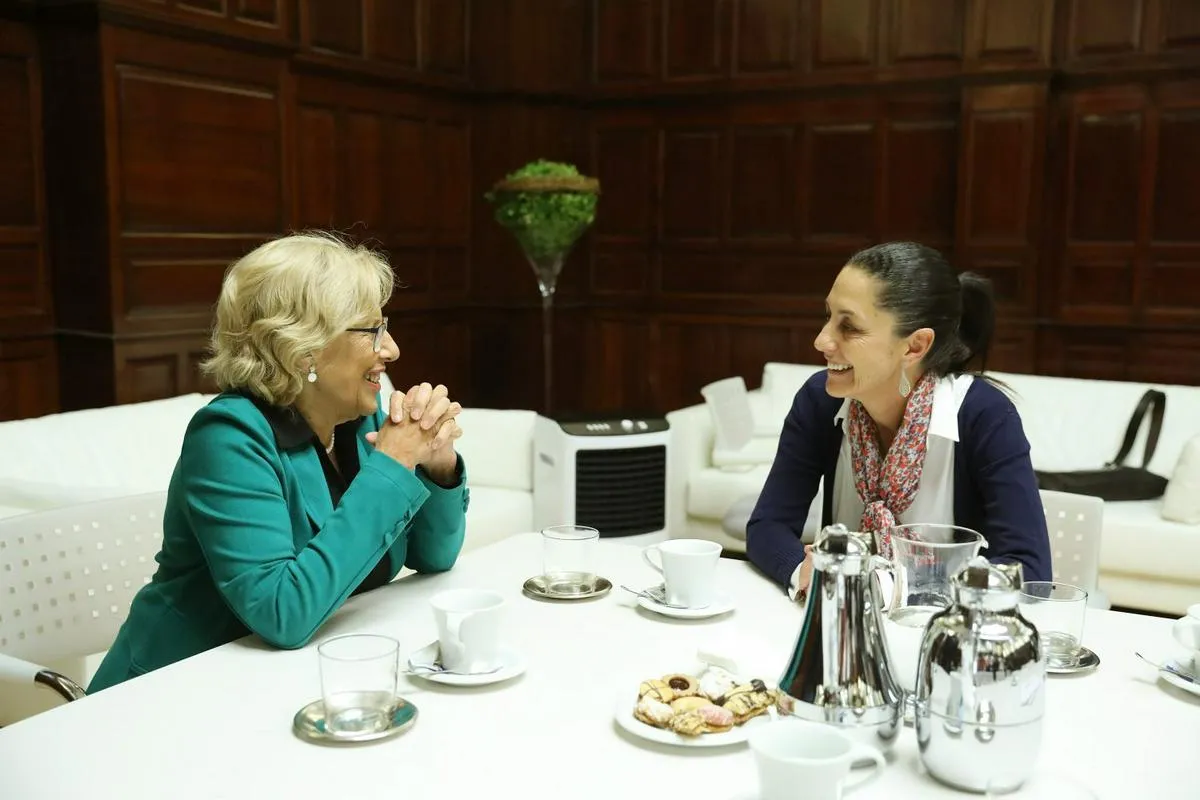
She was the Secretary of the Environment of Mexico City from 5 December 2000, having been appointed on 20 November 2000 to the cabinet of the Head of Government of Mexico City, Andrés Manuel López Obrador. During her term, which concluded in May 2006, she was responsible for the construction of an electronic vehicle-registration center for Mexico City. She also oversaw the introduction of the Metrobús, a bus rapid transit system with dedicated lanes, and the construction of the second story of the Anillo Periférico, Mexico City's ring road.
López Obrador included Sheinbaum in his proposed cabinet for the Secretariat of Environment and Natural Resources as part of his campaign for the 2012 presidential election. In 2014 she joined López Obrador's splinter movement which broke away from the mainstream left-wing party, the Party of the Democratic Revolution. She served as Secretary of the Environment in 2015.
Mayor of Tlalpan
From the end of 2015, Sheinbaum served as the mayor of Tlalpan. She resigned from the position upon receiving the nomination for the candidacy of the mayor of Mexico City for the Juntos Haremos Historia (Together We Will Make History) coalition, consisting of the National Regeneration Movement (MORENA), the Labor Party (PT), and the Social Encounter Party (PES).
2018 campaign for the Head of Government of Mexico City
In August 2017, Sheinbaum participated in a poll conducted by the National Regeneration Movement to determine the party's candidate for the Head of Government of Mexico City. The other contenders were Martí Batres, Mario Delgado, and Ricardo Monreal. Sheinbaum secured first place with 15.9% of the vote, beating her closest opponent, Batres, by 5.8 points. On 5 December 2017, Sheinbaum resigned as mayor of Tlalpan in order to register her precandidacy.
During her campaign launch on 1 April 2018, Sheinbaum named fighting crime as a policy priority, stating that she would hold regular public hearings, publish reported crime statistics, and rely on the Security Council for guidance. She committed herself to generating 1 million jobs during her term, maintaining the universal pension for seniors, and expanding the Mexico City Metrobús system in order to connect the city's outskirts with the center.
During the campaigning period, Sheinbaum was accused by members of Por México al Frente of being culpable for the collapse of the Colegio Enrique Rébsamen, a private school in Tlalpan, during the 2017 Puebla earthquake.
On 1 July 2018, Sheinbaum was elected to a six-year term as the head of government of Mexico City with 47.08% of the vote, defeating six other candidates.
Head of Government of Mexico City (2018–2023)
On 5 December 2018, Sheinbaum was inaugurated as Mexico City's head of government. She became the first female head of government and the first to come from a Jewish background.
Crime and policing
Sheinbaum addressed insecurity through four key axes: addressing root causes, integrating this with her education policy, which included initiatives like the Rosario Castellanos Institute of Higher Studies and the Pilares community centers; enhancing the quality and quantity of police forces; expanding intelligence and investigative capabilities; and improving coordination between the Attorney General's Office, mayors, and the Secretariat of Security and Civilian Protection.
During the first 52 months of her term, Sheinbaum presided over 5,078 homicides, a figure higher than those recorded under the administrations of Andrés Manuel López Obrador, Marcelo Ebrard, and Miguel Ángel Mancera. Despite this, Sheinbaum successfully reduced the homicide rate from 17.9 per 100,000 people in 2018 to 8.6 in 2022.
Education
As part of her administration's education policy, the "Mi Beca para Empezar" scholarship program was created for 1.2 million students from preschool to secondary education, later elevated to constitutional law in Mexico City. The Rosario Castellanos Institute of Higher Studies and the University of Health were created. In addition, community centers called Pilares ("Pillars") were established in marginalized neighborhoods and towns to promote arts, sports, education, and cultural activities.
Environment
In June 2019, Sheinbaum announced a new six-year environmental plan. It includes reducing air pollution by 30%, planting 15 million trees, banning single-use plastics and promoting recycling, building a new waste separation plant, providing water service to every home, constructing 100 kilometers of corridors for the exclusive use of trolleybus lines and the Mexico City Metrobús system, and constructing and installing solar water heaters and solar panels.
Public transport
In September 2019, Sheinbaum announced a 40 billion peso (US$2 billion) investment to modernize the Mexico City Metro over the next five years, including modernization, re-strengthening, new trains, improving stations, stairways, train control and automation, user information, and payment systems. The construction of 200 kilometers of bicycle paths, six bicycle stations, 2,500 new bicycles for the Ecobici system, subsidies for public transportation, and the introduction of the Cablebús cable car system in the Iztapalapa borough have aimed to alleviate traffic congestion and improve transit.
Social issues
In 2019, Sheinbaum implemented a gender-neutral uniform policy for students in state-run schools, allowing them to wear uniforms of their choice regardless of gender.
In 2021, Sheinbaum removed a statue of Christopher Columbus from Mexico City's Paseo de la Reforma as part of what she referred to as a "decolonization" exercise.
COVID-19 pandemic response
Shortly after the first COVID-19 case in Mexico City was confirmed on 28 February 2020, Sheinbaum addressed the city, emphasizing that although the risk was low, it was crucial for the population to stay informed through official sources. On 19 March, Sheinbaum urged residents to stay at home to prevent the spread of infection. She also advised those with symptoms to text a hotline for guidance instead of going to hospitals, in order to avoid overwhelming the healthcare system. On 22 March, Sheinbaum announced the closure of commercial establishments, cultural venues, sports facilities, and religious spaces.
President López Obrador and Sheinbaum had differing views on the use of face masks: Sheinbaum encouraged Mexico City residents to wear face masks, while López Obrador frequently did not to wear them in public.
Sheinbaum was nominated by the City Mayors Foundation for the World Mayor Prize in 2021 in North America for her handling of the COVID-19 pandemic in Mexico.
Collapse of Line 12 of the Mexico City Metro
At around 10:22 p.m. on 3 May 2021, several girders, part of the tracks, and two wagons of Line 12 of the Mexico City Metro collapsed between the Olivos and Tezonco stations. The casualties were 26 dead, 80 injured, and five missing. Line 12 of the Metro was inaugurated on 30 October 2012 by the Head of Government of Mexico City, Marcelo Ebrard, and the President of Mexico, Felipe Calderón.
Engineering flaws that had existed since before the line's inauguration became worse over time, necessitating maintenance repairs over the next three years, including an unprecedented closure of the line to re-shape some sections of tracks, and to replace the rails; most of these improvements were carried out during the term of Miguel Ángel Mancera as Head of Government. On 4 May 2021, Ebrard, then serving as Secretary of Foreign Affairs, said that the work was definitively delivered in July 2013, after reviews carried out for seven months, and expressed his willingness to respond and collaborate in the event of any request from the authorities.
The Norwegian company Det Norske Veritas (DNV), in charge of investigating the causes of the collapse of Metro Line 12, detected that one of the beams that collapsed already had structural failures since before the earthquake of 19 September 2017, a factor that had caused problems in the elevated section of the line that collapsed. On 28 June 2021, Sheinbaum dismissed the general director of the Mexico City Metro, Florencia Serranía.
Some critics said Sheinbaum and other leaders should have worked harder to improve the Metro's infrastructure. Some political observers suggested that the political fallout from the disaster could harm Sheinbaum's candidacy in the 2024 presidential election. The editor of the Mexico City daily newspaper El Financiero, Alejo Sánchez Cano, opined that Sheinbaum's responsibility was unavoidable, stating that after having been in office for two and a half years she was negligent by failing to maintain the Metro system.
2024 presidential candidacy
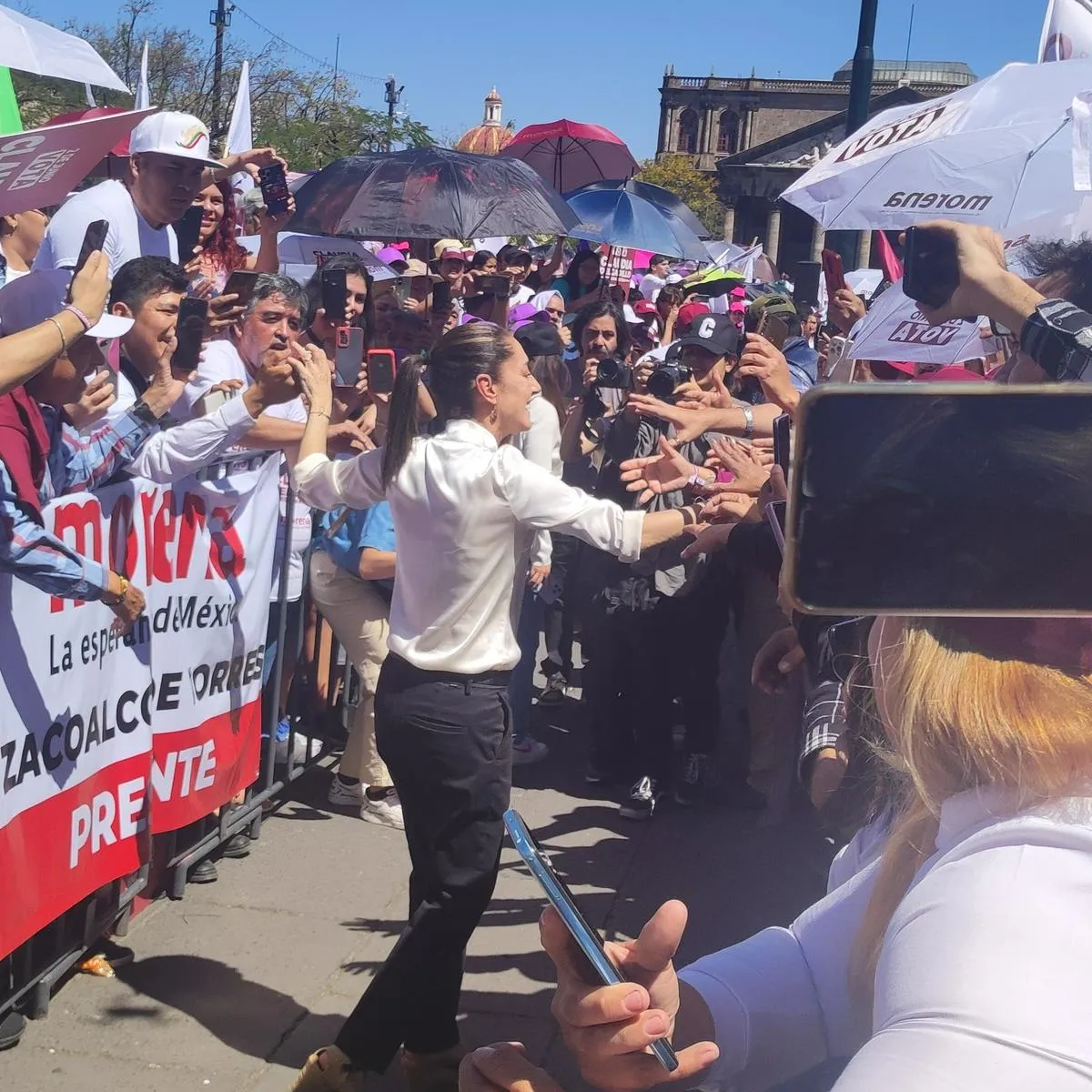
Ahead of the 2024 presidential election, it was announced on 12 June 2023 that Sheinbaum would resign as Mexico City's mayor on 16 June. On 6 September 2023, she was officially chosen for the party's nomination in the 2024 election, defeating former foreign secretary Marcelo Ebrard. Sheinbaum has criticized the neoliberal economic policies of past presidents of Mexico, arguing that they have contributed to inequality in the country.
Political views
Social issues
Sheinbaum has openly identified herself as a feminist, aligning her beliefs and actions with the principles of gender equality and women's rights. She advocates for the legalization of abortion, aligning her stance with broader movements aimed at promoting reproductive rights and autonomy for women. During her leadership in Mexico City, Sheinbaum championed LGBT rights by implementing a gender-neutral policy for school uniforms. In 2022, she became the first Head of Government of Mexico City to attend the city's pride march.
Personal life
In 1986, Sheinbaum met Carlos Ímaz, who later became a prominent political figure in the PRD, during his tenure at Stanford University. They married in 1987 and separated in 2016. They have a daughter, born in 1988. Through the marriage, Sheinbaum became the stepmother to Ímaz's son from a previous marriage, whom she raised.
In 2016, she began dating Jesús María Tarriba Unger, a financial risk analyst for the Bank of Mexico, whom she had known at university. In November 2023, Sheinbaum announced her marriage to Tarriba via social media.
Controversies
Demolition of a chapel in Tlalpan
On 29 April 2016, during Sheinbaum's tenure as mayor of Tlalpan, city staff were ordered to demolish a wall that had been built illegally adjacent to a chapel (Capilla del Señor de los Trabajos) in Tlalpan's Cultura Maya neighborhood. The workers instructed to demolish the wall also destroyed part of the chapel's structure, including its sheet-metal roof, and removed religious images. Juan Guillermo Blandón Pérez, the parish priest, alleged that Sheinbaum was responsible for the demolition of the chapel and claimed that it was carried out without prior notification.
Days after the chapel's demolition, borough authorities acknowledged their error. Sheinbaum met with representatives of the church and proposed dividing the property in half and building a chapel and a community art center.
Enrique Rébsamen School
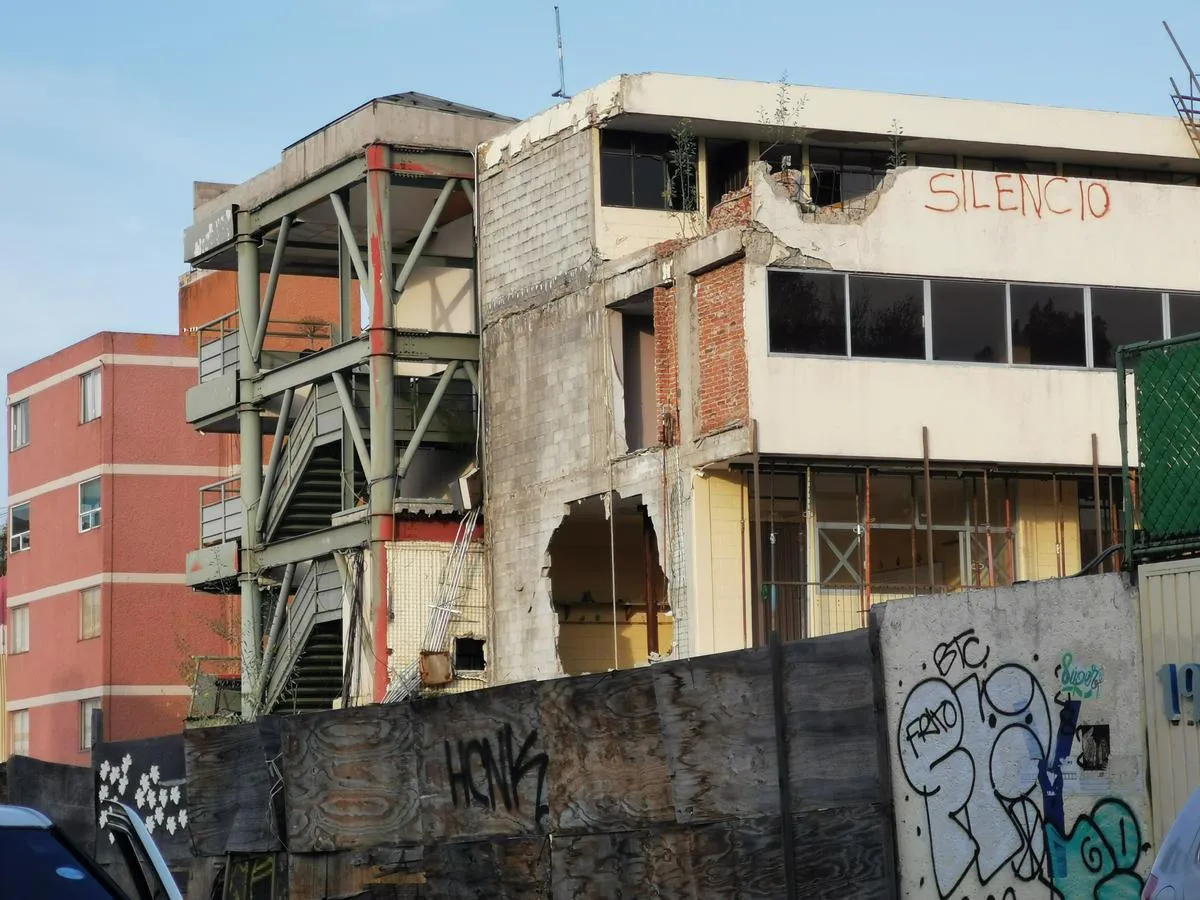
The Colegio Enrique Rébsamen, a private school in Tlalpan, collapsed during the 2017 Puebla earthquake, killing 19 children and seven adults. In September 2016, during Sheinbaum's term as mayor, the city's Institute for Administrative Verification had ruled that the school's building infringed zoning regulations and was built higher than was allowed, and that the owner, Mónica García Villegas, had presented falsified documents. Sheinbaum was criticized for failing to deliver a complete account of the permits for the school's land use, construction, and operation. Enrique Fuentes, a lawyer for a group representing the deceased children's parents, said that the mayor had been under an obligation to act but had failed to do so, and had allowed the school to continue to operate.
Selected bibliography
Sheinbaum is the author of over 100 articles and two books on energy, the environment, and sustainable development. A selection follows:
- Consumo de energía y emisiones de CO2 del autotransporte en México y Escenarios de Mitigación, Ávila-Solís JC, Sheinbaum-Pardo C. 2016.
- Decomposition analysis from demand services to material production: The case of CO2 emissions from steel produced for automobiles in Mexico, Applied Energy, 174: 245–255, Sheinbaum-Pardo C. 2016.
- The impact of energy efficiency standards on residential electricity consumption in Mexico, Energy for Sustainable Development, 32:50–61 Martínez-Montejo S.A., Sheinbaum-Pardo C. 2016.
- Science and Technology in the framework of the Sustainable Development Goals, World Journal of Science, Technology and Sustainable Development, 14:2 – 17. Imaz M. Sheinbaum C. 2017.
- Assessing the Impacts of Final Demand on CO2-eq Emissions in the Mexican Economy: An Input-Output Analysis, Energy and Power Engineering, 9:40–54, Chatellier D, Sheinbaum C. 2017.
- Electricity sector reforms in four Latin-American countries and their impact on carbon dioxide emissions and renewable energy, Ruíz- Mendoza BJ, Sheinbaum-Pardo C. Energy Policy, 2010
- Energy consumption and related CO2 emissions in five Latin American countries: Changes from 1990 to 2006 and perspectives, Sheinbaum C, Ruíz BJ, Ozawa L. Energy, 2010.
- Mitigating Carbon Emissions while Advancing National Development Priorities: The Case of Mexico, C Sheinbaum, O Masera, Climatic Change, Springer, 2000.
- Energy use and CO2 emissions for Mexico's cement industry, C Sheinbaum, L Ozawa, Energy, Elsevier, 1998.
- Energy use and CO2 emissions in Mexico's iron and steel industry, L Ozawa, C Sheinbaum, N Martin, E Worrell, L Price, Energy, Elsevier, 2002.
- New trends in industrial energy efficiency in the Mexico iron and steel industry, L Ozawa, N Martin, E Worrell, L Price, C Sheinbaum, OSTI, 1999.
- Mexican Electric end-use Efficiency: Experiences to Date, R Friedmann, C Sheinbaum, Annual Review of Energy and the Environment, 1998.
- Incorporating Sustainable Development Concerns into Climate Change Mitigation: A Case Study, OR Masera, C Sheinbaum, Climate Change and Development, UDLAP, 2000.