
Introduction
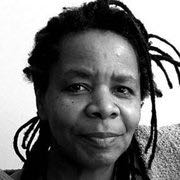
Bebe Miller is an American choreographer, dancer and director.
Early life and education
Miller was born on September 20, 1950, in Brooklyn, New York, to an elementary school teacher and a ship steward. She was raised in a public housing project in the Red Hook neighborhood.
Miller started taking modern dance classes at the age of 5, owing to the fact that her mother had to take exercise classes for arthritis. In an interview, she commented: "[My mother] had arthritis. She found [adult dance] classes at [Manhattan's] Henry Street Settlement and took all of us on Saturdays for years." Miller received creative dance instruction from choreographer Murray Louis who, along with Alwin Nikolais, taught children's dance classes there at the time. Later, when she was 13, she started taking ballet classes at a studio in Carnegie Hall in Manhattan.
She attended Earlham College, a liberal arts college in Richmond, Indiana, graduating with a B.A. degree in Fine Arts, in 1971. After graduation, she moved back to New York and worked as a waitress. A few years later, she studied dance at the Ohio State University, Columbus, Ohio, after receiving a fellowship from them. She graduated from OSU with a Master's degree in dance in 1975.
Career
After finishing her master's degree, she danced for the dance company of Nina Wiener, who had studied with noted choreographer Alvin Ailey and had been a member of the individualistic modern dancer Twyla Tharp's company. She worked with Wiener for six years, in New York and elsewhere.
In addition to performing with Wiener, Miller devoted time to making up her own dances. In the late 1970s and early 1980s, she began performing her own small group pieces and solos downtown in New York City at studios or theater workshops devoted to developing modern dance choreographers. Though she was impressed with Wiener's artistic direction, she wanted to strike out on her own. She left Wiener's company in 1982 and formed her own dance company ("Miller",) two years later.
Commissioned performances of selected original works include The Habit of Attraction, 1987, Thick Sleep, 1989, Rain, 1989, Allies, 1989, and The Hendrix Project, 1991. Commissioned performance of collaborative work, The Hidden Boy: Incidents from a Stressed Memory, 1991.
In addition, she is an Emerita Professor at the Ohio State University.
Dance
Miller's dances subtly reflect her experiences both as a black woman in America and as a member of the black community. "If you look closely, it's there. We all do intensely personal work, not of 'the black experience,' but definitely of the black experience," Miller wryly told the British Dance Theatre Journal in 1987 when she performed in London with other black artists on a showcase tour called Parallels in Black. Increasingly, Miller's modern dance pieces—such as her solo, Rain, which she has described as a "black woman's return to earth," and The Hendrix Project, her celebration of the 1960s rock guitarist Jimi Hendrix's music—show her sense of belonging to a particular community.
Yet Miller maintains that she does not want to sacrifice art to overt political or racial symbolism, and this opinion has earned her both praise and criticism from reviewers and others. Generally, she prefers to emphasize the universal quality of her work, which, she has said, is really about all people and their relationships with one another. "Everyone realizes that the continuity of a group depends on its inner balance, maybe even a reliance on each other, even though it's not necessarily a comfortable place," she told free-lance writer Craig Bromberg in the Los Angeles Times when discussing her 1989 piece, Allies, which concerns the way people instinctively form alliances to ensure their survival.
At a time when black artists are searching for new ways to express independent viewpoints, Miller has managed to remain true to her personal artistic vision while reaching a wide range of audiences. She moves between the parallel worlds of art and the black community, as well as among white and black communities in America. Miller has choreographed a series of physically demanding and emotionally insightful works that have received recognition both in the United States and abroad. Since forming her multicultural New York City-based company in 1984, she has worked on a variety of dance projects, including solos and collaborations with different types of artists.
Los Angeles Times dance critic Lewis Segal described Miller as "part of the generation of postmodern choreographers who fuse a minimalist sense of movement process with the expressive priorities of European dance-theater." He characterized Miller's choreography as "distinctly contemporary in its incorporation of everything from gymnastically daring contact improvisation to pedestrian motion to the disarmingly elegant pointed toe." And Washington Post contributor Pamela Sommers observed: "Miller's stuff comes directly from life experience; there's as much of the street here as the studio."
"Nina made me see how much fun [dance technique] could be; she gave me an appetite for making steps," Miller told Dance Magazine. In a profile of Miller for the Brooklyn Academy of Music's publication On the Next Wave, performing arts writer Robert Sandla asserted that even during Miller's early performances, she "was the dancer you watched; quietly intense, wildly imaginative, with quirky musicality, implosive energy, and bold power kept on a very short leash."
Although Miller has declined to discuss her private life, her work has always been highly personal. Several of her early dances underscore the difficulty of living in New York. A 1984 dance, Trapped in Queens, recreates the mood of the city streets. While others do not stress a black perspective in particular, black influences clearly come through, often in the accompanying music and verse. Miller performed a 1981 work, Jammin', to reggae music, and a 1986 piece, Heart, Heart, to gospel recitation. Later, she focused on the shifting nature of relationships between men and women. When describing Two, Miller's collaborative duet with dancer Ralph Lemon, Attitude contributor Cynthia S. West observed how Miller and Lemon brought out this theme--"he extended a hand, she reached for it, and plunged violently sideward. When he gestured again, she, trusting one more time, was supported and swept away."
In the mid-1980s Miller and her dancers received more exposure through increased touring throughout the United States. Several of Miller's works, including Two and Spending Time Doing Things, a solo danced to a version of the composer Duke Ellington's song, "In My Solitude," won choreography fellowships and awards. Miller was also commissioned and invited to perform new works in the city and around the country. During this time she expanded her scope to include working with writers, set designers, and visual artists, and she incorporated written text into her pieces. Miller's blending of these elements into her dances helped her shape what Attitude has called her "mesmerizing eclectic style."
In 1987 Miller was commissioned by the acclaimed Alvin Ailey Repertory Ensemble and other dance companies to create new works. Her existing work was performed by a dance company in Amsterdam, the Netherlands. During that year and the next, Miller choreographed a series of dances, including the Habit of Attraction. Lewis Segal observed that The Habit of Attraction simultaneously examines "two stormy love relationships, suggesting why one broke apart and one cohered, but focusing most of all on the electric interplay between participants: high-risk partnering of devastating intensity."
In 1989, as a counterbalance to what she called the "sense of antagonism and drama" in The Habit of Attraction, Miller choreographed Allies, a 35-minute piece commissioned in part by New York's Brooklyn Academy of Music. Allies signified a career breakthrough for Miller because it was her first appearance at the Academy's Next Wave festival. It was also produced on a bigger scale than her previous pieces. Though some critics considered Allies too long, others praised Miller's choreography and use of an appropriate set—which included underwater pictures of both sexes and emphasized her interest in human interaction. Miller has described the piece as being about recognizing one's friends and one's enemies and yet finding ways of living together. "I feel that we do, as human beings, figure out how to make things work," she remarked to Joan Acocella in 7 Days. "That's what I wanted to look at: what kinds of compromises we make, what reconciliations."
With Allies Miller danced a solo called Rain, which received more favorable reviews than Allies for its innovative movement: Acocella described how Miller, wearing a red velvet dress, lay on her back and crawled feet first onto a carpet made of real grass and earth. While critics generally viewed Rain as a blend of Miller's personal vision with social commentary on everything from the environment to African liberation—symbolically, the colors in the piece were black, red, and green—Miller has said that Rain is more of a spiritual journey to the interior than a search for roots. As she told Bromberg, "You're not left with the fact of blackness but the fact of me. And I think that has to do with where I'm going. And I might be going there because of my blackness and my femaleness. But it's a place everybody can go."
When she was rehearsing Allies, Miller was already thinking about putting together a piece using the music of Jimi Hendrix. While Miller has said that she was inspired by Hendrix's music, she also admits being influenced by the spiritual legacy of the 1960s and urgency of social issues in the 1990s. "There are many pressing issues which are being virtually ignored," she told Sandla. "I feel my dancing needs to reflect [them] in some way--without handing out flyers. Maybe that's why Hendrix feels right just now." In 1991 she and her company performed The Hendrix Project in Los Angeles and San Francisco in a program titled Black Choreographers Moving Towards the 21st Century, before traveling on to New York and Europe.
The Hendrix Project was interpreted as political by some critics because Miller used Hendrix's controversial arrangement of "The Star Spangled Banner" and danced on a disordered black and white game board, which San Francisco Chronicle critic Marilyn Tucker suggested was a "road map" of America. However, Rita Felciano, another San Francisco-based writer, observed in High Performance that while Miller's piece "was boiling with fierce dancing" it also had "a curiously playful side to it ... as if looking back at Hendrix, Miller understood his daring, rage and anxiety but could not fully identify with it." Other critics admired the energy in the piece, as well as its style and form. Lewis Segal, for instance, observed: "From Miller's opening solo to the final duet ... The Hendrix Project plunged deep and flew high, with constant, supercharged shifts in level, direction, scale and impetus."
During 1992 Miller began exploring the possibility of making a broadcast version of The Hendrix Project for television. In addition, she was commissioned for a new work by the Boston Ballet, and her own company appeared at festivals in Austria and Hungary. Clearly, Miller has come a long way from performing in small, avant-garde theaters to emerging as a leading independent black choreographer. Arlene Croce, writing in the New Yorker, deemed Miller's work "the most promising of the rising generation" with a "movement palette broad enough for her to shift styles ... with no loss of force."
Miller is likely to continue to have a major impact on the dance world during the 1990s and no doubt will leave her mark in dance history, along with other black women modern dance choreographers, including Pearl Primus and Katherine Dunham. "I'm really trying to find new markers with each piece, to observe what worked in one that might improve the next," Miller told Robert Sandla. "I would not say that building a career as an independent choreographer has been easy, but I don't think it's been as hard for me as it's been for some. Looking back ... I think that maybe, just maybe, I've gotten somewhere."
Influences on modern dance
Miller had focused a lot on the relationship between dancers. She focused mainly on the way that male and female relationships had developed. Miller also liked her dancers to work "equally" with one another, despite their gender. Miller also used motion capture technology to discover new choices of movement as she called it. Miller also uses video projections which add a sense of visual energy. As stated in an article written by choreographer Joseph Carman, "When Bebe Miller launches into her solo, Rhythm Studies, she may be creating a new genre of dance: black urban flamenco. Stamping on the floor, beating on a set of drums, and then venting her anxieties through words and gestures, she reaches for a primal place that could only be accessed by a woman of vast experience" (Carman).
Awards and achievements
- Creative Artists Public Service Fellowship, 1984, for choreography
- New York Foundation for the Arts Choreographer's Fellowship, 1984 and 1991
- National Endowment for the Arts Choreographer's Fellowship, 1985, 1986, 1987, and 1988
- New York Dance and Performance Award ("Bessie") for choreography, 1986 and 1987
- American Choreographer Award and John Simon Guggenheim Memorial Fellowship, both 1988
- Dewar's Young Artists Recognition Award, 1990
- Creative Capital Award in the discipline of Performing Arts, 2006
- Doris Duke Artist award, 2012
In 2010, Miller was named a Fellow by United States Artists
Other sources
- Attitude, January–April 1987.
- Carman, Joseph. "Bebe Miller Company" Dance Magazine 16 Nob 1999. Print.
- Dance Magazine, May 1986; December 1989.
- Dance Theatre Journal, Spring 1987.
- High Performance, Fall 1991.
- Los Angeles Times, February 13, 1989; January 21, 1990; January 29, 1990; April 20, 1991.
- Miller, Bebe Wilson Web 1999. The HW Wilson Web Company. Print.
- New Yorker, February 20, 1989.
- New York Times, November 30, 1989; May 26, 1991.
- On the Next Wave, Brooklyn Academy of Music, October 1989.
- San Francisco Chronicle, April 26, 1991.
- 7 Days, December 13, 1989.
- Washington Post, March 10, 1989.